
Archive recovered in November 2026. The date refers to the original appearance; this text adds context and is not a verbatim transcript.
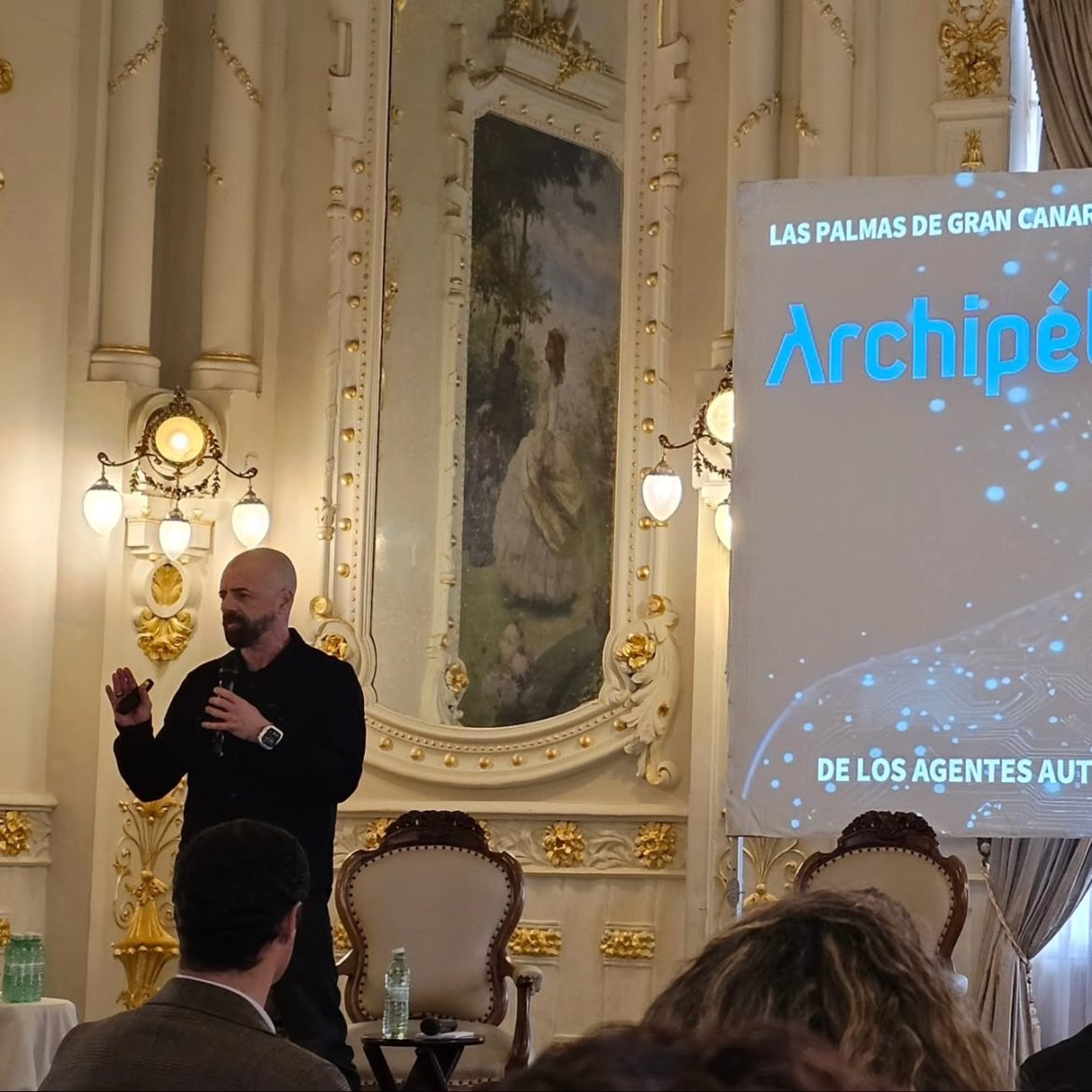
On 23 January 2025 I joined the Archipélago Next gathering in Las Palmas de Gran Canaria with “AI 2025: from autonomous agents to physical AI”. The agenda places the conference at Gabinete Literario. Its theme considered the evolution of artificial intelligence through the implications for businesses.
The difference between conversing with a system and delegating a task changes our relationship with technology. Once actions, tools and processes enter the picture, questions arise about permissions, supervision and responsibility. That transition formed a central thread of the discussion.

Delegation requires a clear brief
An agent needs objectives and boundaries understood by the people putting it to work. What may it consult, which actions may it perform and when should it return a decision to a person? These are questions of organisation and design. Autonomy needs direction informed by context.
In a business, that context includes knowledge distributed across teams, documents and practical experience. Connecting the pieces calls for judgement. A tool’s speed becomes valuable when we know which result is expected and how to review it.
Intelligence acting in physical space
The title’s second half opened the discussion towards robotics and physical AI. Acting in a material environment introduces space, movement, people and operating conditions. That wider scope opens a discussion about which capabilities an organisation should develop.
Digital representations such as MetaHuman also offered a way to examine identity, interfaces and presence. These are examples from the technology ecosystem, rather than my products or deployments announced by the organiser.
Recovering the conference places the debate in January 2025 and within a specific business gathering in the Canary Islands. A human question connects its two halves: how to direct increasingly capable systems so their actions have purpose, boundaries and identifiable responsibility.