

We are living through a unique moment: the era of agentic AI. Machines no longer just answer; they plan, use tools, execute and check their own work. I look back over seventy years of history, imagine ten years of the future and defend a simple idea: artificial intelligence brings the speed; people bring the judgement, the assurance and the responsibility.
I have been waiting for this moment all my life
I will say it plainly: I am happy. I have spent 44 years in digital technology and 35 as a computer engineer, and for almost all my life I have been waiting to see what I am seeing now. For decades we dreamed of machines that would understand us, learn, and help us think and build. Today that dream is no longer a promise made at a conference: it is my everyday life.
I do not live it with fear; I welcome it with open arms. And precisely because I embrace it, I feel bound to look at it through the eyes of technohumanism: technology at the service of people, never the other way round. This article is both a celebration and a declaration of principles.
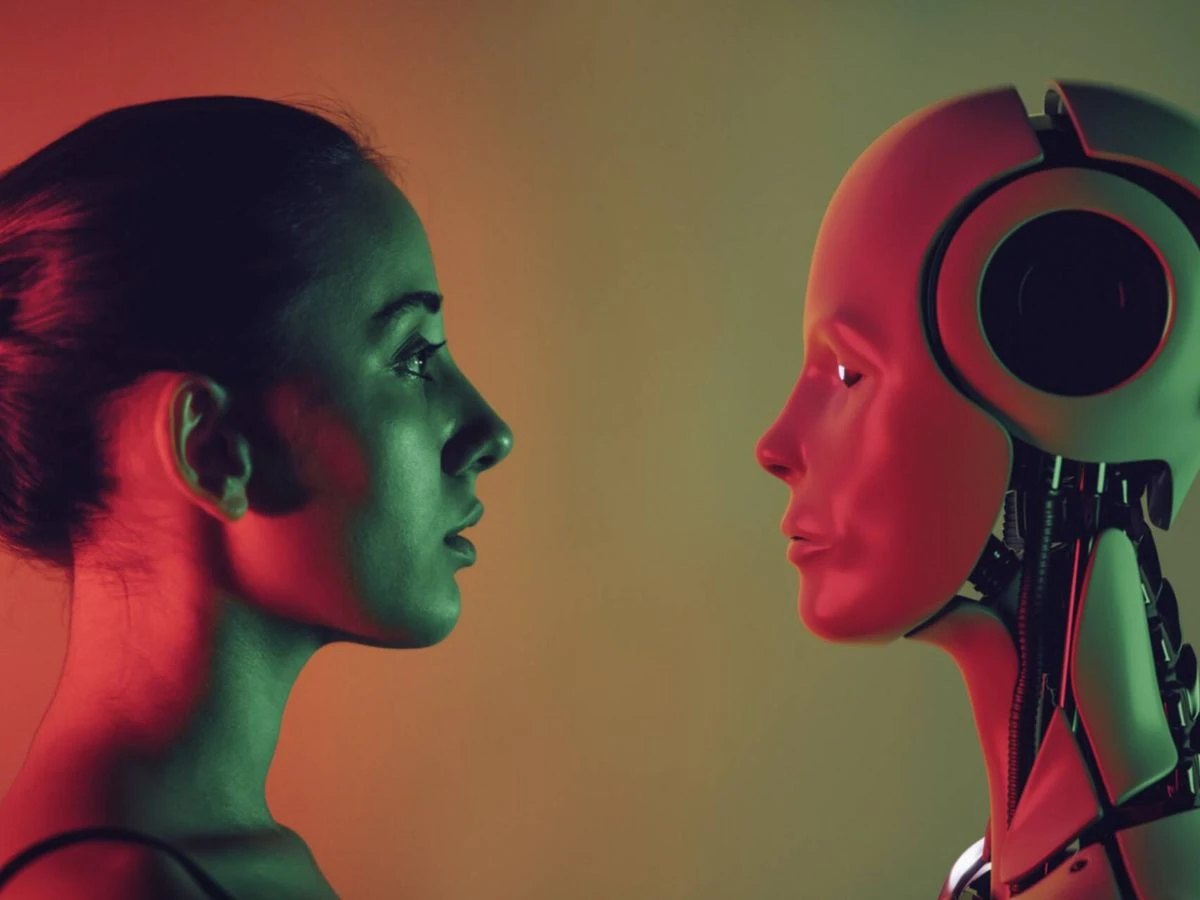
From model to system: what agentic AI is
Until very recently, generative artificial intelligence was a conversation: you asked and it answered. Agentic AI is something else. The language model is no longer the whole product; it becomes one piece of a system that brings together context, memory, tools, permissions, planning, execution and verification. It no longer generates answers: it carries out tasks.
The 2026 data confirm it:
- Autonomy is soaring. METR estimates that the length of the tasks models can complete doubles roughly every 3.6 months (update of 20 November 2026).
- Software first. According to Stanford’s AI Index 2026, on SWE-bench Verified the best systems went, in a single year, from 60% to nearly 100% of real programming problems solved.
- Using a computer the way a person does. On OSWorld, which measures real tasks on a computer, success rose from around 12% to 66.3%, very close to the human 72%. On real terminal tasks, from 20% to 77.3%.
- Mass adoption. 88% of the organisations surveyed by McKinsey already use AI regularly in at least one business function.
- And it does not stop. On 17 November OpenAI unveiled GPT-6.2 Astra and Sol, designed for complex projects and for everyday agentic work.
There are clear limits too. Robots solve only around 12% of the real household tasks evaluated, and the International Energy Agency estimates that the electricity consumed by data centres will grow from 485 TWh in 2025 to around 950 TWh in 2030. The agentic era is real, but it is not magic.
How the computer engineer’s work has changed
If any profession has lived this transformation first-hand, it is mine. In a few months the engineer’s work has changed more than in the previous three decades. We used to write every line of code; today we describe what we want, hand it to agents that write, test and document it, and our work becomes something else: defining the problem well, setting the rules, reviewing, verifying and deciding.
It is incredible. What used to be a week’s work can be ready in an afternoon. But speed is worthless if it heads in the wrong direction. The engineer of this era looks less like a craftsman polishing every piece and more like a conductor who knows exactly how the work should sound, listens to every instrument and answers to the audience for the result.
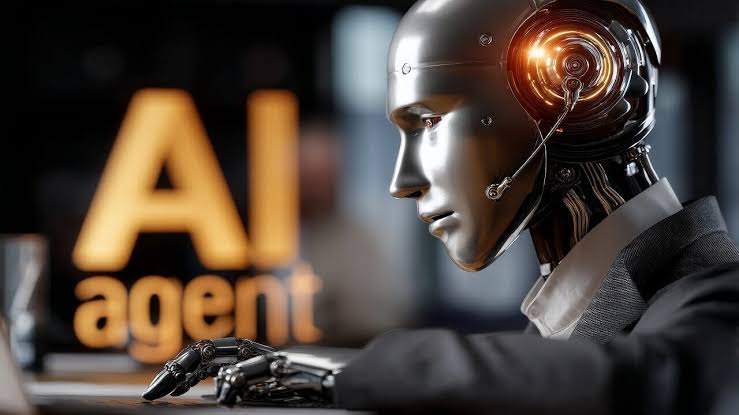
AI brings the speed; humans bring the judgement, the assurance and the responsibility
This is my thesis, and I defend it in my talks: when execution becomes almost instantaneous, what is scarce is no longer the doing, but knowing what is worth doing, making sure it is done well and answering for it.
Judgement
An agent can try a hundred paths in a minute, but someone has to decide where to go. Judgement is choosing the right problem and setting the goals, the limits and the acceptance criteria; it is knowing what not to do. It is experience, context, values and common sense. And it cannot be delegated.
Assurance
Speed multiplies the hits and the mistakes alike. That is why every agentic system needs someone who verifies, who checks before the result reaches a client, a patient or a citizen, and who puts their name to it. Assurance is trust turned into method: testing, reviews, traceability and human control at the points that matter.
Responsibility
A machine answers to no one. People do. When something goes wrong, responsibility cannot be outsourced to an algorithm: it belongs to whoever decided to deploy it, whoever defined its permissions and whoever accepted its result. The more power we give to agents, the clearer that chain of responsibility has to be.
Artificial speed, human judgement. That is the alliance that lets us move forward without losing our way.
It is the same idea I shared at the Foro Santander on the Cognitive Transition, and the one that gives meaning to all my work.
Seventy years in a heartbeat (1956–2026)
To understand why this moment is so special, we have to look back. Artificial intelligence was born as a discipline in the summer of 1956 and has come through winters, revivals and revolutions to get here.
The great eras
| Period | Era | What defines it |
|---|---|---|
| 1956–1973 | Symbolic AI | Logic, search, symbols and rules |
| 1974–1979 | First winter | Less funding, lower expectations |
| 1980–1986 | Expert systems | Specialised knowledge, encoded |
| 1987–1993 | Second winter | Commercial and technological crisis |
| 1994–2011 | Machine learning | Learning from data |
| 2012–2016 | Deep learning | Learning complex representations |
| 2017–2021 | Foundation models | Transformers, pre-training and scale |
| 2022–2023 | Generative AI | Generating multimodal content |
| 2024 | Reasoning AI | Thinking longer before answering |
| 2025–2026 | Agentic AI | Tools, planning, execution and verification |
Ten turning points
| Year | Breakthrough | Paradigm shift |
|---|---|---|
| 1956 | Dartmouth | Formalising artificial intelligence |
| 1957 | Perceptron | Learning through weights |
| 1986 | Backpropagation | Training multilayer networks |
| 1997 | Deep Blue and LSTM | Specialised search and sequential memory |
| 2006 | Deep Belief Networks | Training deep architectures |
| 2012 | AlexNet | Scaling neural learning with GPUs |
| 2017 | Transformer | Contextual relationships through attention |
| 2022 | ChatGPT | Democratising generative AI |
| 2024 | Reasoning models | More computation at inference time |
| 2025 | Agentic expansion | From generating answers to carrying out tasks |
In a single line: in 1956 we programmed rules; in 1980 we encoded knowledge; in 1990 we learned from data; in 2012, representations; in 2017, contextual relationships; in 2022 we generated content; in 2024 we reasoned; in 2025 we acted with tools; and in 2026 we orchestrate systems of agents.
Full timeline, year by year (1956–2026)
| 1956 | Dartmouth Conference: McCarthy, Minsky, Rochester and Shannon launch AI as a discipline. Logic Theorist proves theorems. |
| 1957 | Rosenblatt develops the perceptron. |
| 1958 | McCarthy creates LISP. |
| 1959 | Arthur Samuel popularises the term machine learning with his checkers program that learns. |
| 1960 | Widrow and Hoff present ADALINE, one of the first applied neural networks. |
| 1961 | Unimate, the first commercial industrial robot, goes to work in a General Motors factory. |
| 1962 | Rosenblatt publishes Principles of Neurodynamics. MADALINE arrives, a network of several ADALINEs. |
| 1963 | DARPA funds MIT’s Project MAC. |
| 1964 | STUDENT solves algebra problems written in natural language. |
| 1965 | DENDRAL begins, a forerunner of expert systems. |
| 1966 | Weizenbaum presents ELIZA, one of the first chatbots. |
| 1967 | Cover and Hart: the nearest-neighbour algorithm. |
| 1968 | A* is published, the basis of heuristic search. |
| 1969 | Minsky and Papert publish Perceptrons. |
| 1970 | Linnainmaa formalises reverse-mode automatic differentiation. |
| 1971 | Winograd develops SHRDLU. |
| 1972 | Colmerauer and Roussel create Prolog. |
| 1973 | The Lighthill report triggers funding cuts in the United Kingdom. |
| 1974 | The first AI winter begins. Werbos describes backpropagation for neural networks. |
| 1975 | Holland publishes his seminal work on genetic algorithms. |
| 1976 | MYCIN diagnoses bacterial infections. |
| 1977 | Lenat presents AM, which discovers mathematical concepts. |
| 1978 | XCON, a forerunner of commercial expert systems. |
| 1979 | The Stanford Cart avoids obstacles using computer vision. |
| 1980 | Expert systems boom. Fukushima publishes the Neocognitron. |
| 1981 | Japan announces its Fifth Generation Computer project, which gets under way in 1982. |
| 1982 | Hopfield presents his associative memory networks. |
| 1983 | DARPA launches the Strategic Computing Initiative. |
| 1984 | Valiant introduces PAC learning. |
| 1985 | Hinton, Ackley and Sejnowski present Boltzmann machines. |
| 1986 | Rumelhart, Hinton and Williams popularise backpropagation. Quinlan publishes ID3. |
| 1987 | First NIPS conference (today NeurIPS). The second winter begins. |
| 1988 | Judea Pearl systematises Bayesian networks. |
| 1989 | LeCun applies convolutional networks to handwritten digits. Watkins proposes Q-learning. |
| 1990 | The foundations of reinforcement learning with Q-learning take hold. |
| 1991 | Sutton presents Dyna: reinforcement learning and planning. |
| 1992 | Watkins and Dayan prove the convergence of Q-learning. Tesauro publishes TD-Gammon. |
| 1993 | TD-Gammon plays backgammon at the level of the best players. |
| 1994 | The VaMP project drives autonomously on European motorways. |
| 1995 | Cortes and Vapnik publish SVMs. Freund and Schapire present AdaBoost. |
| 1996 | Deep Blue wins its first game against Kasparov. |
| 1997 | Deep Blue defeats Kasparov. Hochreiter and Schmidhuber present LSTM. |
| 1998 | LeCun and colleagues publish LeNet-5. |
| 1999 | NVIDIA launches the GeForce 256 as a GPU. |
| 2000 | Honda presents ASIMO. |
| 2001 | Breiman publishes Random Forests. |
| 2002 | iRobot launches Roomba. |
| 2003 | Bengio and colleagues: a neural language model, a forerunner of today’s. |
| 2004 | First DARPA Grand Challenge. Google publishes MapReduce. |
| 2005 | Stanford’s Stanley wins the DARPA Grand Challenge. |
| 2006 | Hinton and colleagues relaunch deep learning with Deep Belief Networks. |
| 2007 | NVIDIA launches CUDA. |
| 2008 | t-SNE is published. |
| 2009 | Fei-Fei Li and colleagues present ImageNet. |
| 2010 | DeepMind is founded. The ImageNet competition starts. |
| 2011 | IBM Watson wins Jeopardy! Apple presents Siri. |
| 2012 | AlexNet sweeps ImageNet: the deep learning revolution begins. |
| 2013 | Google presents Word2Vec. |
| 2014 | Goodfellow presents GANs. Seq2Seq and neural attention arrive. |
| 2015 | OpenAI is founded. Google releases TensorFlow. Microsoft presents ResNet. DeepMind masters Atari games. |
| 2016 | AlphaGo defeats Lee Sedol. WaveNet arrives. |
| 2017 | Attention Is All You Need presents the Transformer. AlphaZero learns by playing against itself. |
| 2018 | GPT-1 and BERT open the era of pre-trained models. |
| 2019 | GPT-2, StyleGAN and T5. |
| 2020 | GPT-3. RAG. AlphaFold 2 transforms protein structure prediction. |
| 2021 | DALL-E, CLIP and Codex. GitHub Copilot. LoRA. |
| 2022 | ChatGPT, on 30 November. Stable Diffusion and Midjourney. Chain-of-Thought and ReAct. |
| 2023 | GPT-4, Claude, LLaMA, Gemini and Mistral. AutoGPT, BabyAGI and AutoGen. Function calling. |
| 2024 | GPT-4o and Claude 3.5 Sonnet. OpenAI o1 and the reasoning models. Anthropic presents MCP and Computer Use. The European AI Act enters into force. |
| 2025 | The expansion of agents: DeepSeek-R1, Claude Code, Codex and agentic development environments. |
| 2026 | Agentic consolidation: long tasks, multi-agent orchestration and specialised models. Competition is played out on reliability, cost and operational capability. OpenAI presents GPT-6.2 Astra and Sol on 17 November. |
A history of the future (2027–2036)
Now for the most exciting exercise: imagining the next decade. It is speculation, but speculation grounded in what we can already see. My hypothesis is that the spotlight will move from models to systems able to operate continuously across digital and physical environments.
| Year | Era | What could happen |
|---|---|---|
| 2027 | Persistent autonomy | Agents move from one-off tasks to managing projects over several days, with memory, checkpoints and automatic verification. |
| 2028 | Synthetic workers | Specialised agents with identity, permissions, tools and bounded responsibilities. Hybrid workforces of people and agents. |
| 2029 | Agentic organisations | Companies whose digital operations are run mostly by agents. People set the goals, limits, priorities and acceptance criteria. |
| 2030 | Cognitive automation | Professional performance equal to or better than a human’s in many well-defined digital activities. |
| 2031 | Recursive AI | AI automates a large part of AI research itself and shortens technology cycles. |
| 2032 | Embodied AI | Robots with multimodal models that generalise better: logistics, industry, construction and services. |
| 2033 | Autonomous science | Robotic laboratories that propose hypotheses and design and run experiments, under human supervision. |
| 2034 | Cognitive infrastructure | AI stops being an application and becomes a cross-cutting layer of companies, public administrations and devices. |
| 2035 | Sector superintelligence | Systems that far outperform expert teams in certain fields, without that amounting to general intelligence. |
| 2036 | Civilisational transition | Artificial cognitive capacity as a central factor of production. The great debate: ownership, distribution, governance and human control. |
The curve that could accelerate everything
A mathematical exercise, not a prediction: if the capacity to solve long tasks doubled just once a year, by 2028 it would be 4 times today’s; by 2030, 16 times; by 2032, 64; by 2034, 256; and by 2036, more than a thousand times. At the pace METR measures today, the figures would be even more dizzying. But we should not get confused: that horizon measures the length of certain tasks a system solves with a given probability; it does not measure general intelligence, absolute autonomy or universal reliability.
When will AGI and superintelligence arrive?
| Milestone | Window | Confidence |
|---|---|---|
| Reliable persistent agents | 2027–2029 | High |
| Highly autonomous organisations | 2028–2032 | Medium-high |
| Functional AGI in digital environments | 2029–2034 | Medium-low |
| Sustained recursive self-improvement | 2030–2035 | Low |
| Specialised superintelligence | 2031–2036 | Medium-low |
| General superintelligence | 2033–2045 or later | Very low |
| Technological singularity | Impossible to date | Speculative |
These are qualitative estimates, not probabilities or scientific consensus. They could be blown apart by reliability, energy, the diminishing returns of scaling, the capital available or regulation.
The industrialisation of cognition
If I condense eighty years, from 1956 to 2036, I see eight great revolutions: the formalisation of AI (1956), multilayer neural learning (1986), deep learning at scale (2012), the Transformer (2017), content generation (2022), task execution (2025) and, if what I sense comes true, the automation of cognitive work (2030) and the industrialisation of artificial cognitive capacity (2036).
I believe the most important thing about the next decade will not necessarily be the arrival of AGI, but that industrialisation: being able to deploy, replicate, specialise and coordinate cognitive capacity at scale. The Industrial Revolution mechanised physical strength. The Digital Revolution mechanised information processing. The Cognitive Revolution may mechanise a substantial part of intellectual work.
What is never delegated
That is why technohumanism is more necessary today than ever. The more cognitive capacity we put in the hands of machines, the more it will matter to decide who owns it, how it is shared, who governs it and where human control lies. The question is no longer whether AI can do it, but whether it should, who checks it and who answers for it.
And here I come back to where I started, to the emotion. I am lucky enough to live, as an engineer and as a person, the moment I dreamed of all my life. I embrace it with joy, and everything that comes after it. But I embrace it with one certainty: artificial intelligence gives us the speed, and it is up to us to bring the judgement, the assurance and the responsibility. That is the task of our generation. And it is thrilling.
Shall we bring it to your organisation?
If you want your team to understand the agentic era and make the most of it with judgement, I can help:
- Talks on agentic AI, the Cognitive Transition and technohumanism for conferences, companies and institutions. Speaker dossier.
- In-company and tailor-made training for executives and teams: generative and agentic AI, productivity, governance and digital transformation.
- Projects and consulting with WECOLAB: AI strategy, agents and process transformation.
- My books: Superhumanos (LID, 2025) and Transición Cognitiva (Cognitive Transition, 2026).
- Contact: tell me what you need and we will design it together.
Sources
- METR, “AI R&D-relevant model capabilities are improving rapidly and are getting harder to measure”, 20 Nov 2026: metr.org
- Stanford HAI, AI Index Report 2026: hai.stanford.edu and 12 takeaways from the report
- International Energy Agency, Key questions on energy and AI: iea.org
- McKinsey, The state of AI in 2025: mckinsey.com
- OpenAI, GPT-6.2 Astra and Sol, 17 Nov 2026: community.openai.com
- Anthropic, Model Context Protocol (Nov 2024) and Computer Use (Oct 2024): anthropic.com, anthropic.com
- European Commission, regulatory framework for AI (AI Act): digital-strategy.ec.europa.eu