
Archive recovered in November 2026. The original publication is documented by month; the 15th shown in the header is assigned to organise this archive.
In January 2011 Sergio García Pino and I published “Seven keys to successful branded apps” in Yorokobu. The preserved pages, numbered 30 and 31, establish our joint authorship and the substance of that discussion about mobile applications for brands. The archive identifies the month, without a verified publication day.
My WakeApp business card places the Creative Technology Director role within that professional period. The original article asked what an application could offer beyond putting a brand on a phone. I revisit its criteria without projecting later tools or products onto 2011.
An app needs a reason for people to return
The first concern was usefulness: meeting a specific consumer need. A download could begin a relationship without ensuring it would continue. Designing an app meant considering what someone would do with it a second time and why they would return.
The second idea connected experience with reputation. An app was a brand touchpoint, so an unfulfilled promise affected the commercial relationship. The third advocated focus: a few well-resolved functions were preferable to an accumulation of irrelevant possibilities.
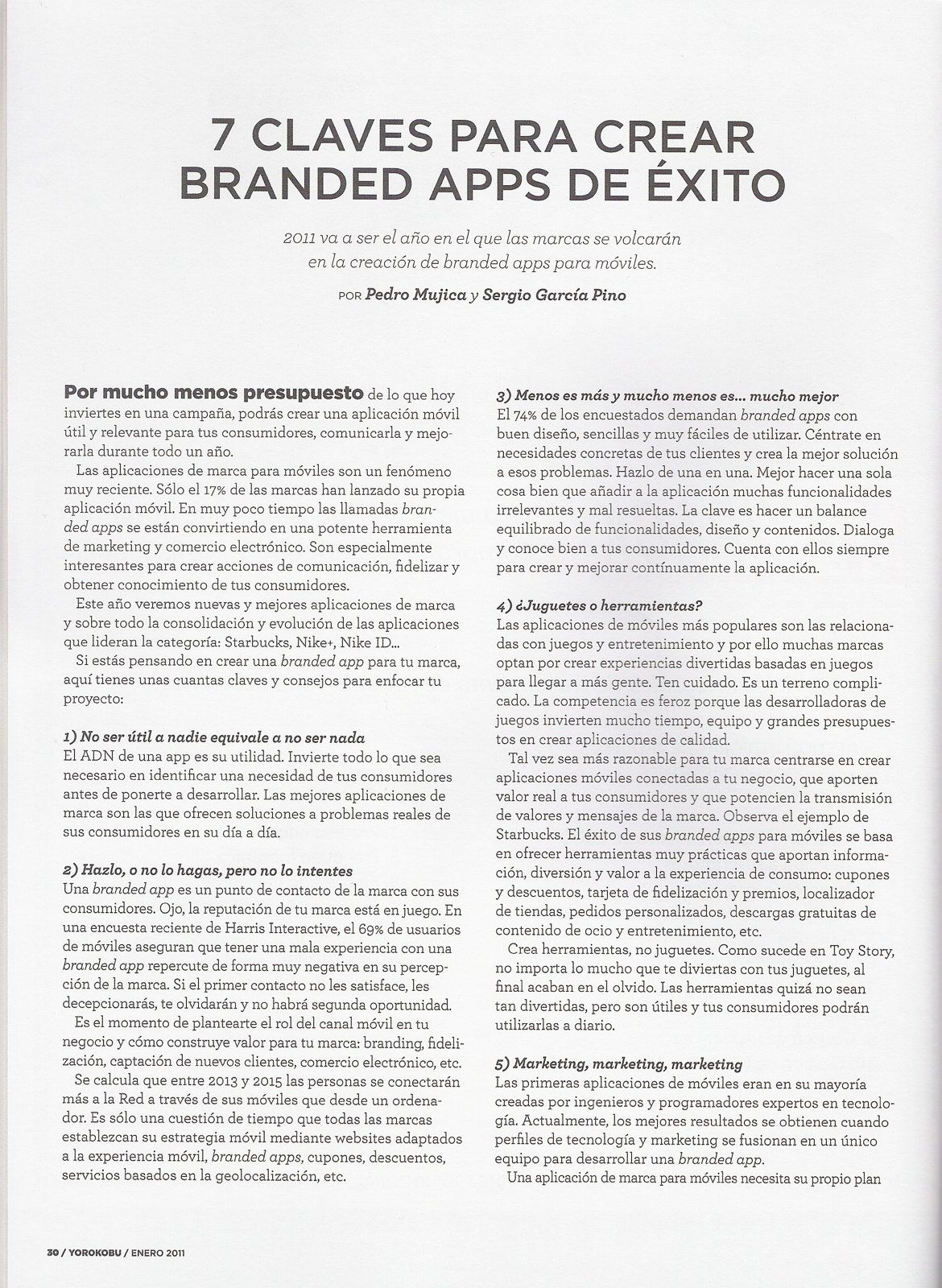
Read “Seven keys to successful branded apps” as PDF · Download PDF
Service, communication and technology
The fourth criterion distinguished entertainment from service. Making a game meant entering a demanding field; a tool connected with the brand’s activity could offer a clearer everyday relationship.
The fifth placed marketing inside the project, from audiences and messages to subsequent communication. The sixth considered each device’s characteristics alongside the resources needed to maintain different versions.
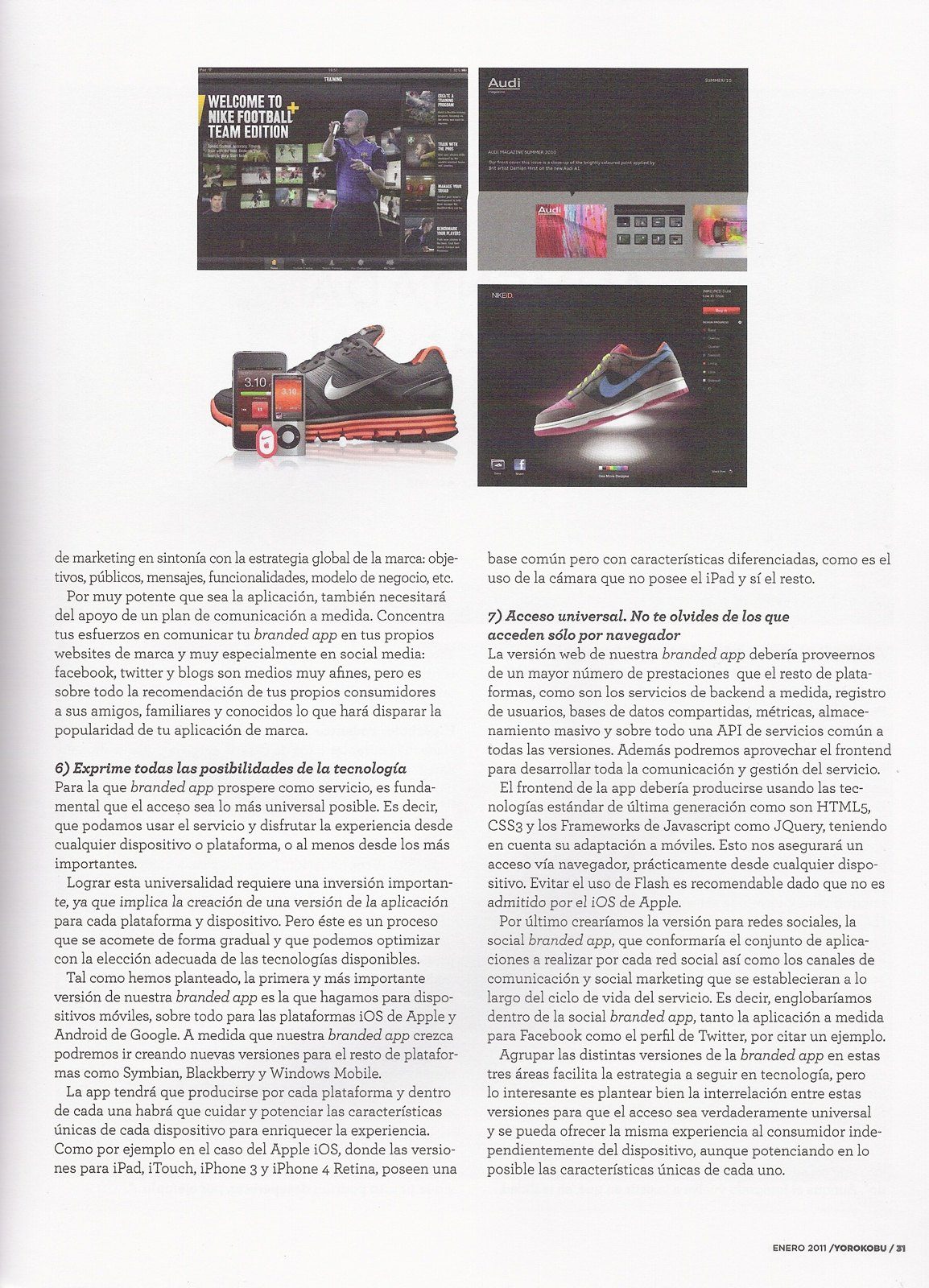
Browser access was part of the product too
The seventh key remembered people arriving through a browser. The article connected mobile, web and social versions through shared services rather than treating them as isolated pieces. That concern for continuity relates to my later work designing digital ecosystems.
The printed figures and forecasts belong to January 2011. I preserve the document as historical material rather than a current statistical guide. Its continuing interest lies in a design approach: understand people, define something useful and sustain it throughout the service.
Another entry in my career archive: SiteGround Fabuloso Madrid 2017: UX/UI, ecommerce and human experience.