
Archive recovered in November 2026. The date refers to the original appearance; this text adds context and is not a verbatim transcript.
During 2019 I taught workshops combining 360 photography and video with WebVR programming at Gran Canaria Espacio Digital, a centre run by the island council. My teaching archive records seven workshops between May and December. The 29 August date identifies this surviving Speaking record; this article recovers the programme and its practical work without assigning every image to one particular day.
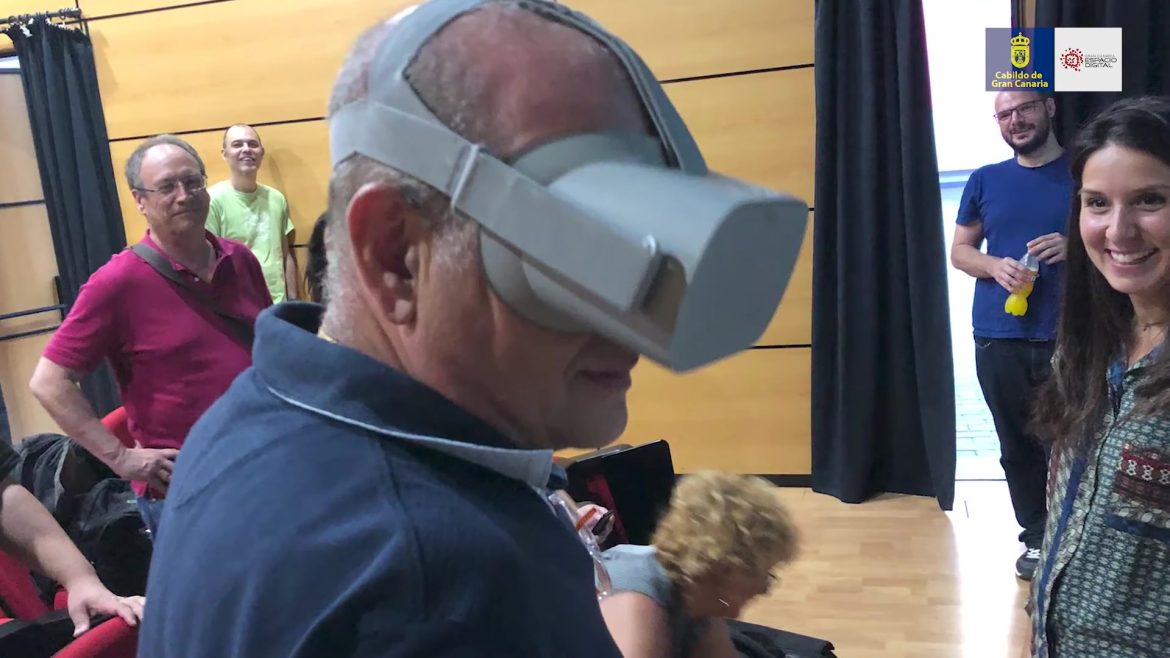
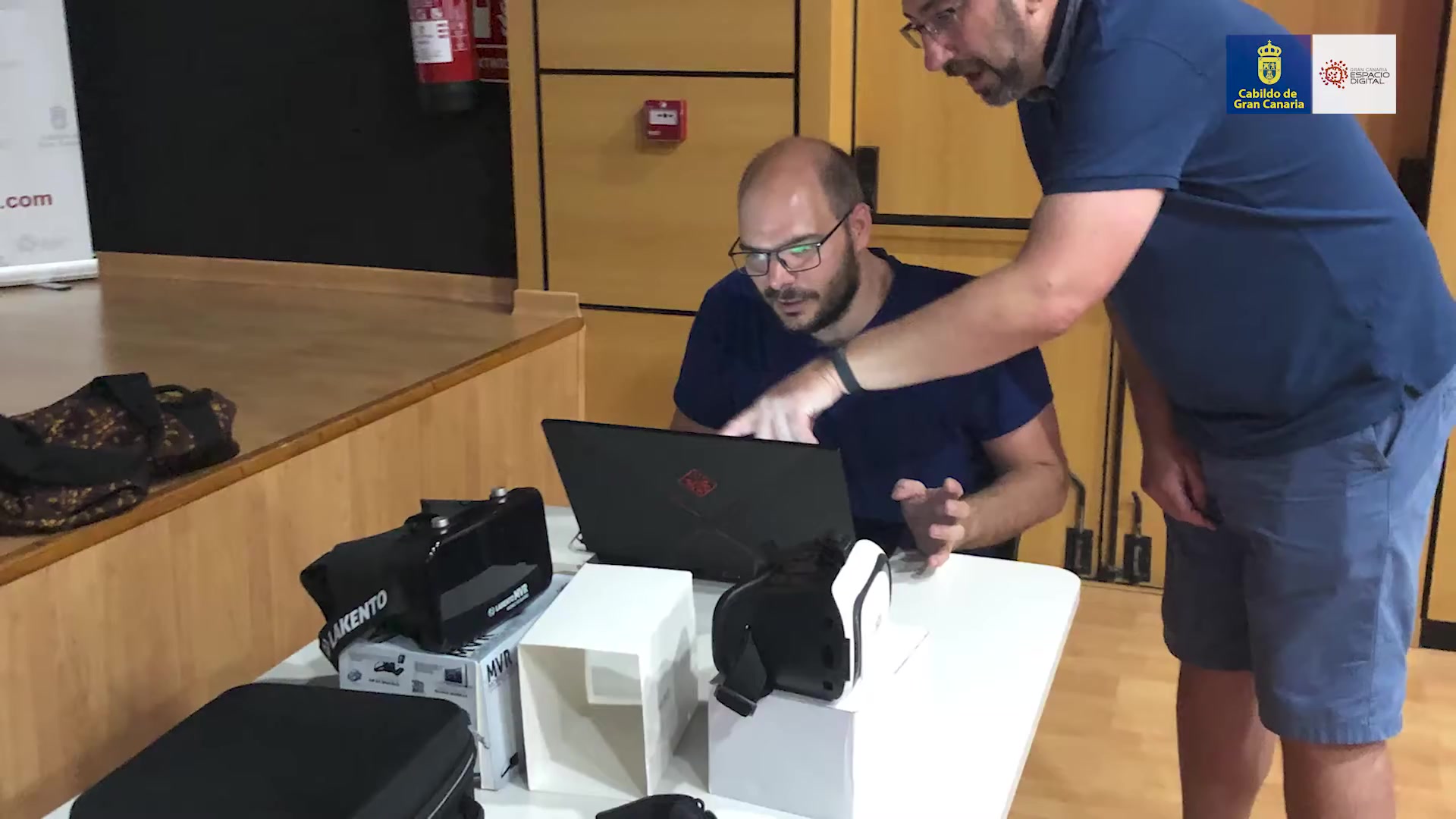
The footage reveals something a list of technologies cannot convey: people trying headsets, handling cameras and working together at a computer. Learning virtual reality includes supporting that first encounter and turning curiosity into an experience participants can build.
Photographing an entire space
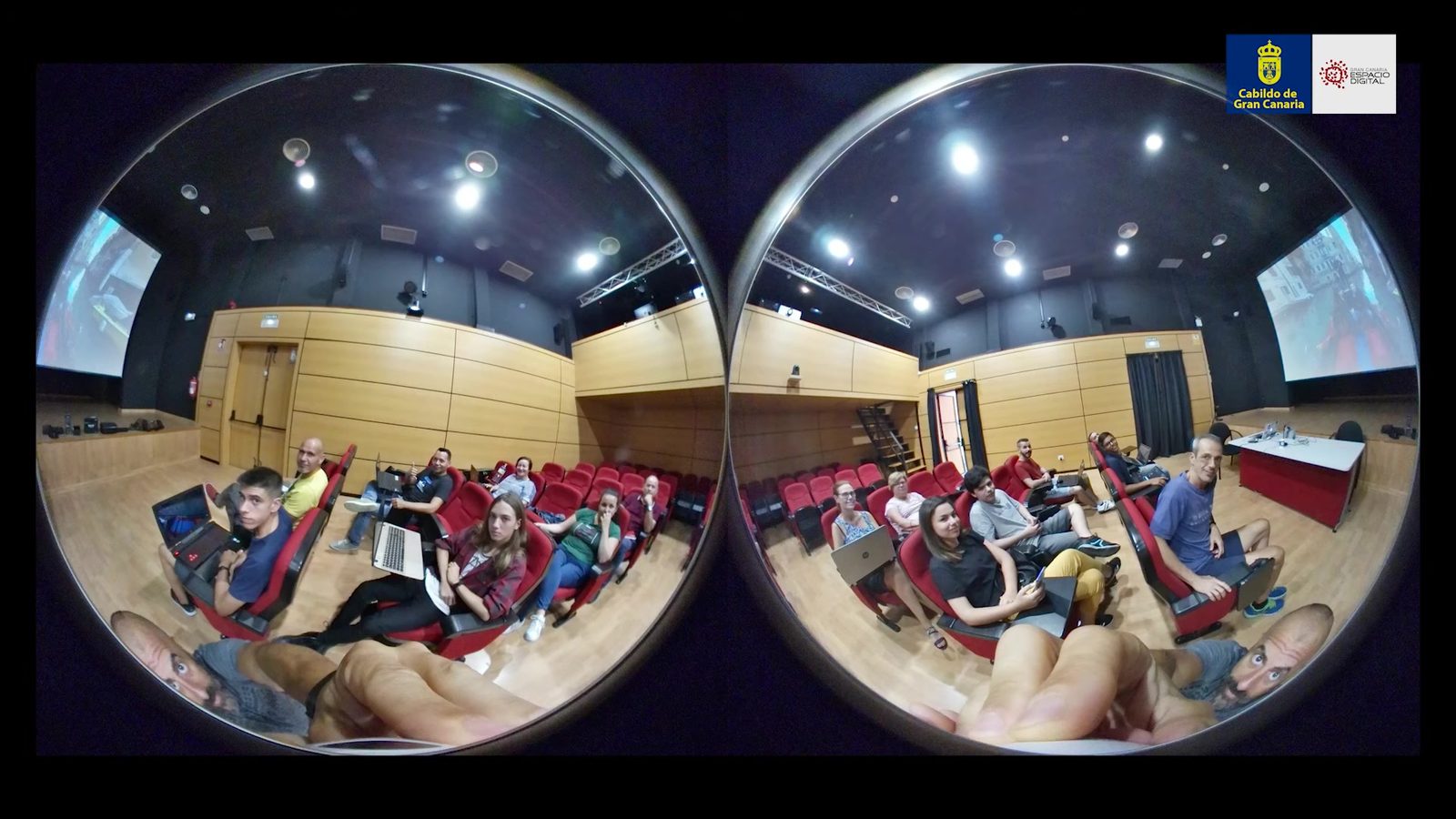
A 360 camera changes the meaning of framing. Viewers can look around and discover elements that would remain outside a conventional photograph. Camera position, lighting and the organisation of the scene require a different kind of attention.
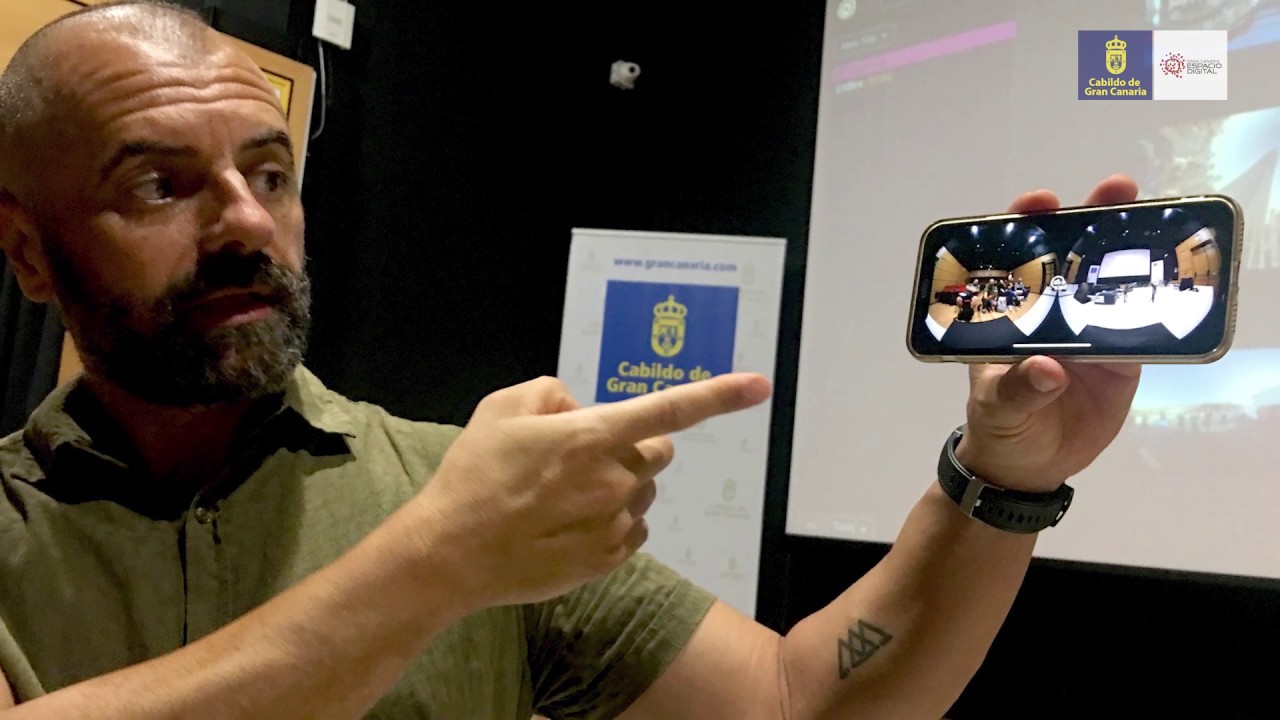
This also changes storytelling. When everything can be seen, we need ways to guide attention while allowing exploration. Capturing the scene and designing the viewer’s experience become connected parts of the same task.
From capture to a web experience
WebVR programming provided a route from spherical images to experiences reached through a browser. The training connected content production with interaction: capturing, reviewing, organising a space and deciding how to navigate it. The browser became a place to experiment with presence and orientation.
Keeping the term WebVR places the activity in its 2019 context. The WebXR documentation offers a further reference for readers interested in the subsequent technical evolution.
These images preserve the practical side of my educational work in the Canary Islands. Explaining ideas is one part of teaching; putting tools into other people’s hands makes room for their questions, difficulties and discoveries.