
Archive recovered in November 2026. The date refers to the original appearance; this text adds context and is not a verbatim transcript.
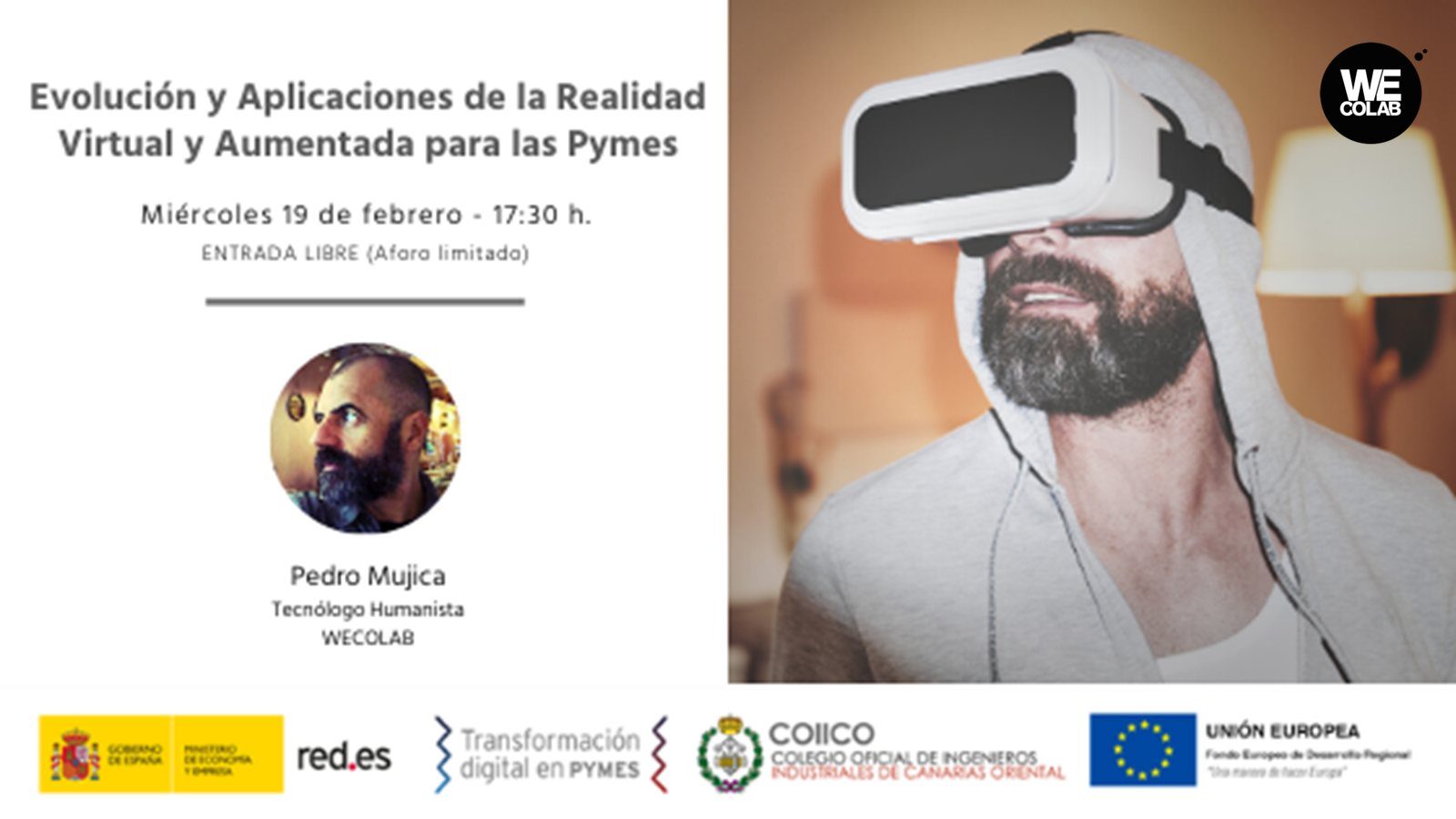
On 19 February 2020 I taught a session in Las Palmas de Gran Canaria on the evolution and applications of virtual and augmented reality for SMEs, within COIICO’s Digital Transformation Office. The surviving programme allocated two hours to concepts, interfaces and business possibilities.
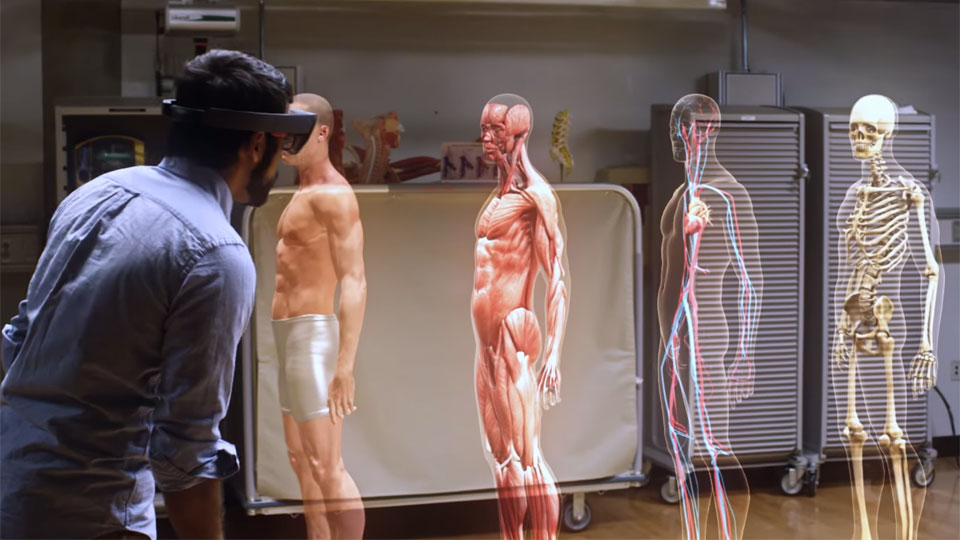
Topics included the relationship between XR and AI, changes in user experience, holographic computing and human–machine interaction. The images here come from the teaching material. They illustrate technologies, rather than documenting deployments by companies attending the session.
Begin with a specific activity
For a small business, the useful question is what can improve in its work. Training someone, explaining a product and reviewing a design are different activities. Each has its own conditions, costs and ways to assess whether an experience creates value.
Virtual reality provides a simulated environment, while augmented reality adds digital information to the perception of physical space. Choosing between them requires understanding the task and its context. The tool must support that decision and fit an operation someone can maintain.
The device is one part of the system
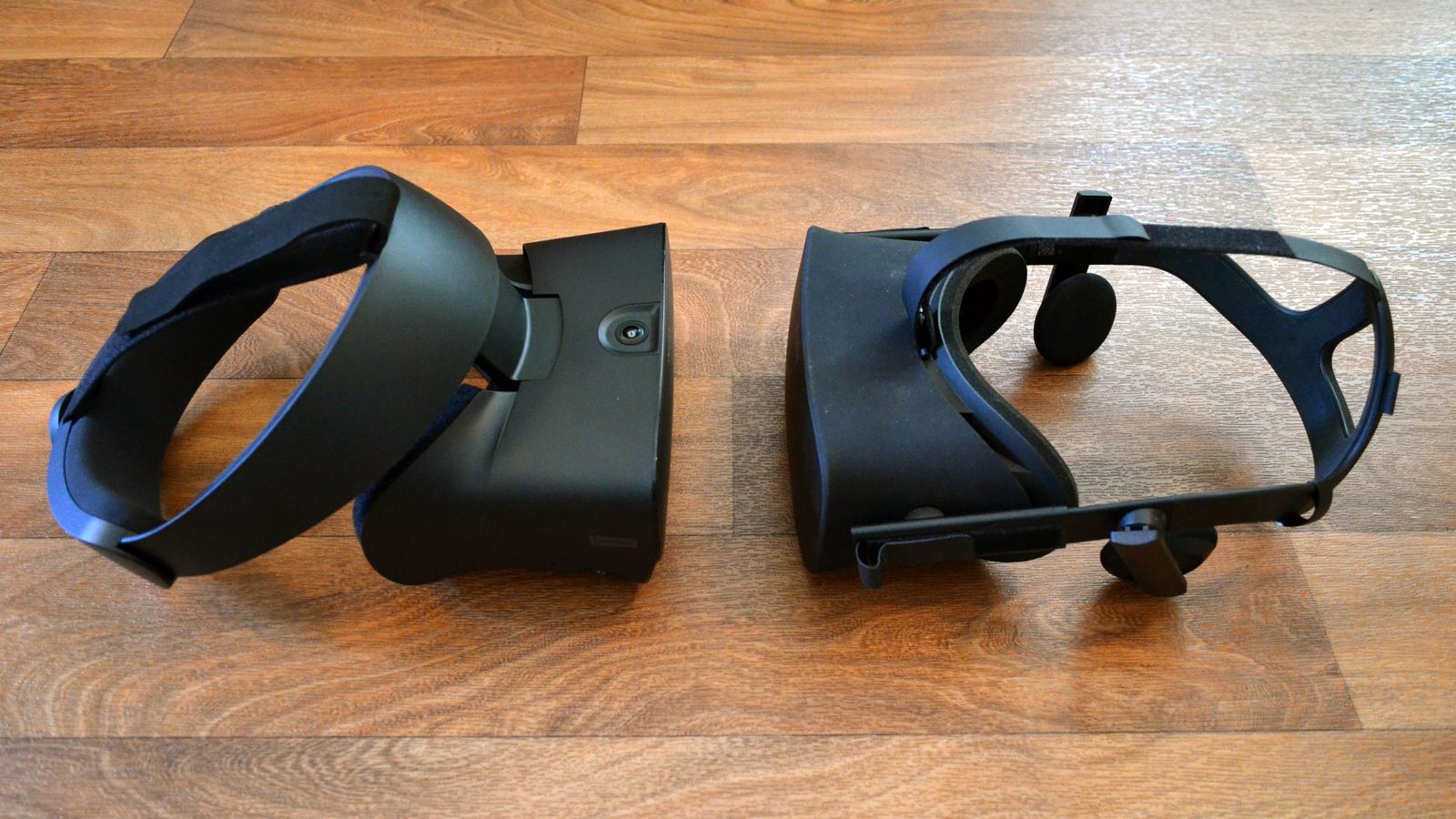
An immersive experience needs content, interaction, support and a place within the activity. Buying a headset does not determine how people will learn to use it, who will update its content or which alternatives will be available.
This is why I connect the technological discussion with service design. What happens before someone puts on a device, during the experience and after it ends can matter as much as the quality of the scene being displayed.

Innovation guided by use
The COIICO programme also covered technohumanism and the opportunities of immersive experiences. It shows how those questions intersected in my work: exploring possibilities while asking how they relate to the people who will live with them.
An initial trial can remain small when its purpose is clear. Observing where it helps, where it confuses and how much effort it requires provides a basis for the next decision. That learning is more useful than a promise of transformation detached from a specific activity.