

Archive recovered in November 2026. The header date refers to the original appearance; this entry provides context and is not a verbatim transcript.
On 6 July 2023 I delivered “The generative-AI revolution inside organisations” for Binter in Gran Canaria. The title slide preserves the date and locates a session focused on understanding artificial intelligence and its implications for work.
The purpose was to translate technological change into questions an organisation could recognise. Before deciding what to adopt, capabilities, expectations and specific tasks needed to be distinguished. An impressive demonstration did not explain how an entire process would change.
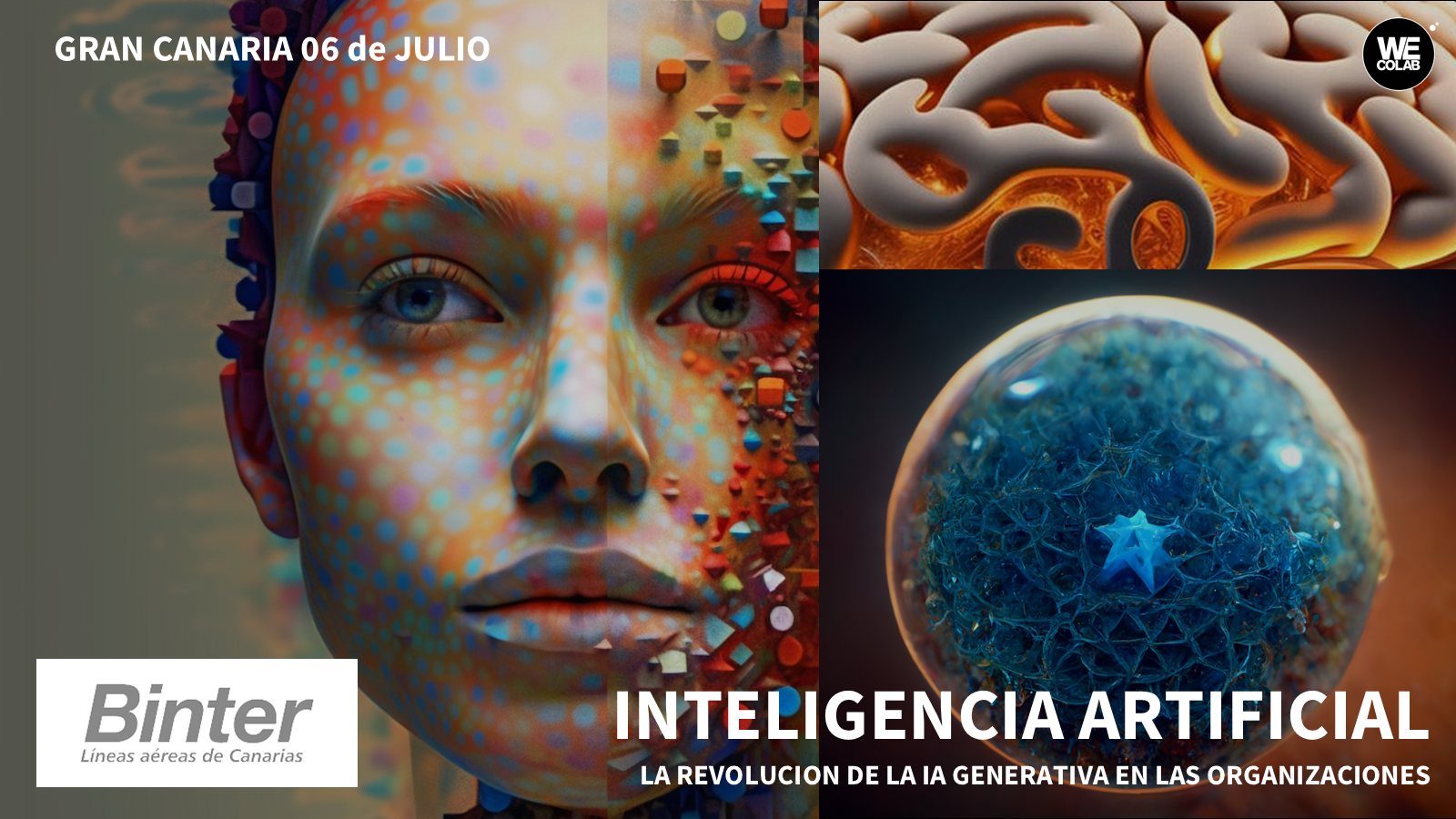
Understand differences before choosing tools
The materials reviewed areas of AI, machine learning, computer vision and generative models. These distinctions help prevent every system being treated as one universal tool.
Prediction, classification and content generation address different problems. A convincing output is not necessarily a checked result. Workplace use requires decisions about review, accessible information and responsibility.
From a demonstration to everyday work
Ameca appears in the materials as a reference for interfaces and communication with machines. The image depicts Engineered Arts’ robot; it does not document a robot deployment at Binter. It helps separate appearance, interaction and effective capability.
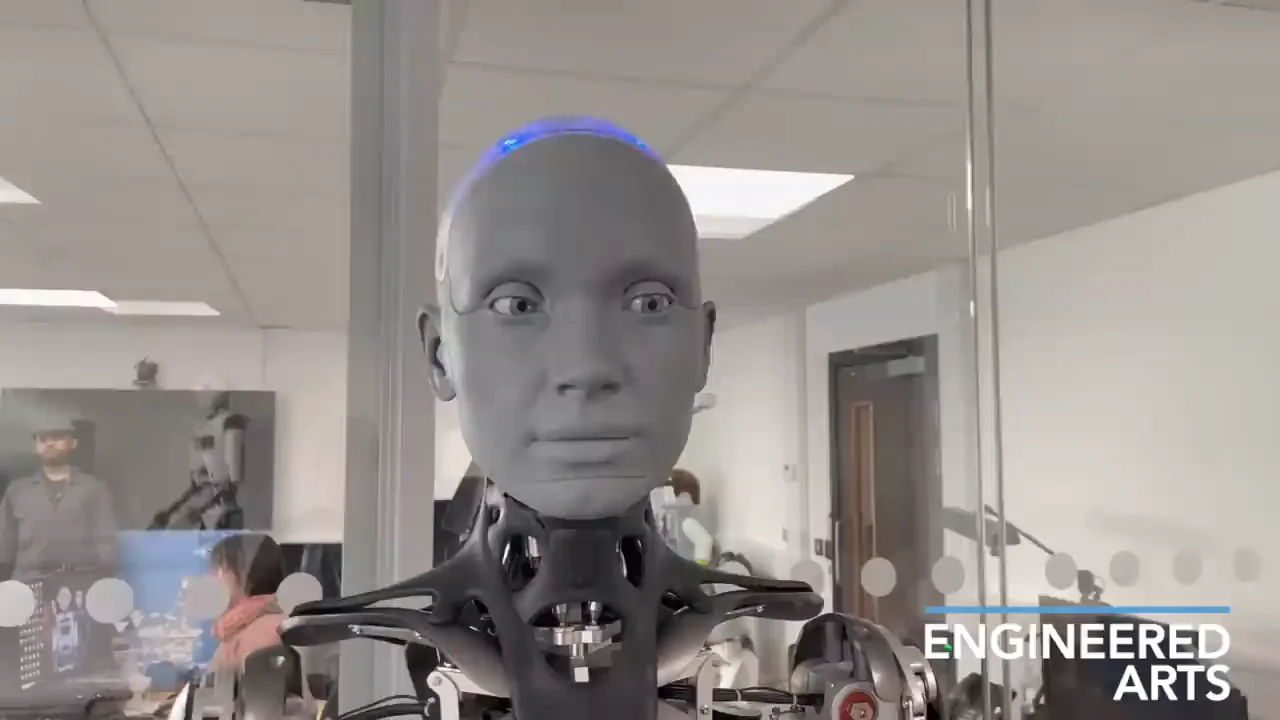
For an organisation, that distinction has practical implications. A problem needs understandable language, followed by examination of the complete task: where information comes from, what is produced, who checks it and what happens when the result is unsatisfactory.
Responsibility when introducing AI
The session belongs to 2023: a period of learning and discussion about bringing new capabilities into an organisation’s work.
Recovering the appearance shows part of my work with organisations: developing a shared vocabulary for better decisions. UNESCO’s 2021 recommendation supplies a public ethical framework. This entry asks how technical possibilities can become understandable decisions for the people who will work with them.
Another appearance from my current archive: Tech & People 2023 in Madrid: artificial intelligence and human resources.