
Archive recovered in November 2026. The header date refers to the original appearance; this entry provides context and is not a verbatim transcript.
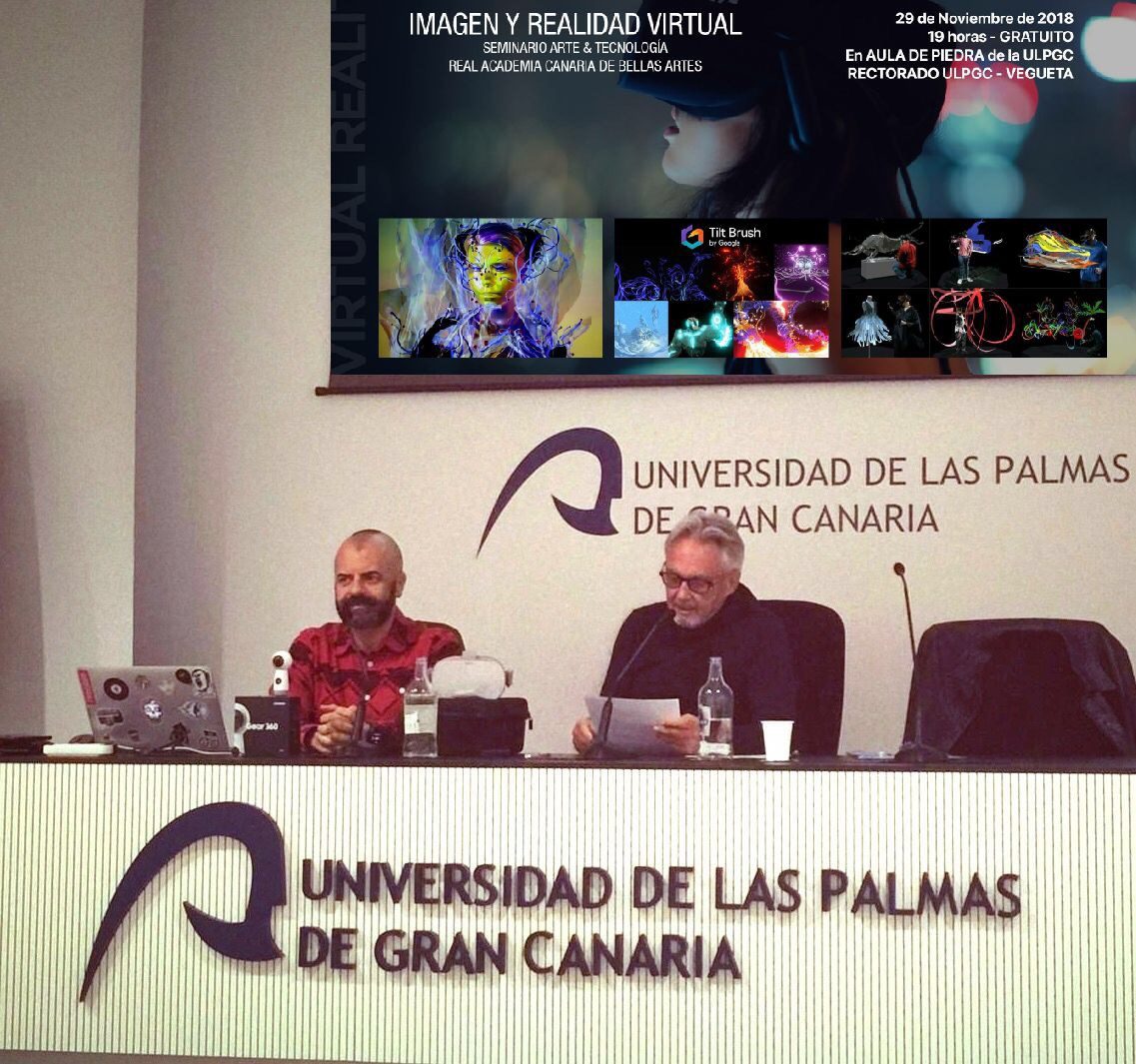
On 29 November 2018 I participated in “Images and artificial reality”, part of the University of Las Palmas de Gran Canaria’s Art & Technology seminar. The session placed virtual reality in an artistic conversation about images, perception and experience.
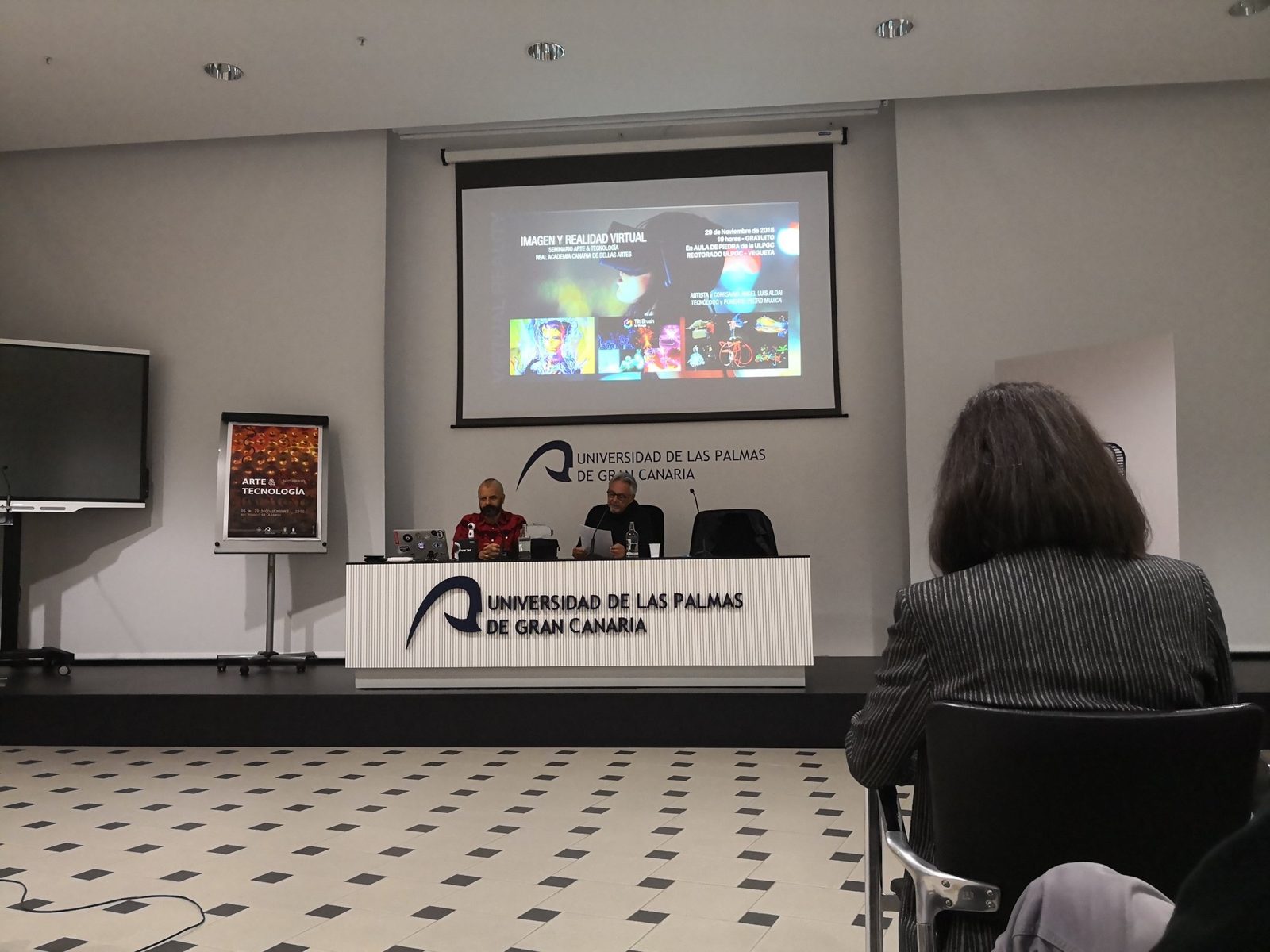
The university programme confirms this closing session. The seminar connected creative practices with their tools and technological transformations. The recording and photographs preserve my contribution to that day.
An image that can be explored
Looking at an image and finding oneself inside a visual environment are different experiences. In an immersive space, gaze direction, scale and the body’s position influence interpretation. Creators must consider what happens beyond the initial field of view.
This raises artistic questions: what appears first, how attention is guided and how much freedom visitors retain to explore. Composition remains important, but changes its relationship with someone who can turn, approach or pause.
Technology as expressive material
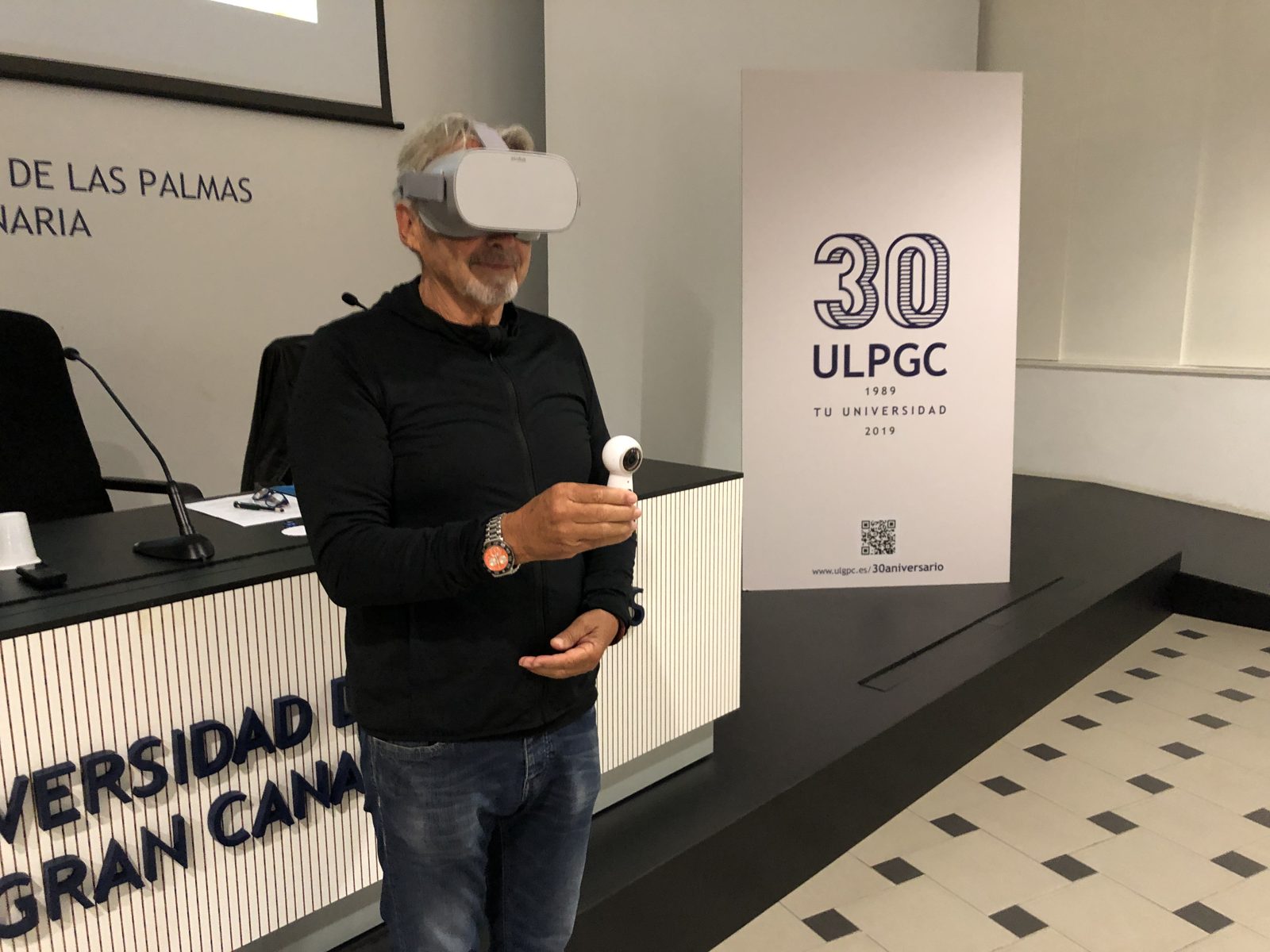
A headset does not automatically make a work meaningful. Its value depends on the relationship between medium and idea. A tool can provide presence, an otherwise inaccessible perspective or a particular experience of space; it can also introduce discomfort when its use lacks purpose.
That is why I value connecting technical explanation with direct experience. Trying a device reveals limitations that are hard to appreciate from outside: weight, attention, readability, orientation and the relationship with people who remain in the room.
Art and shared learning
A university session offers time to discuss why a tool is being used and what it changes in creative practice. Artists, teachers and engineers can ask different questions about the same device.
This appearance belongs to my extended-reality outreach before the metaverse dominated public discussion. Preserving its context makes visible a history of work on images and presence that extends beyond a fashionable label.
Another entry in my career archive: Immersive worlds at Fundación Telefónica, Madrid 2018.