
Archive recovered in November 2026. The header date refers to the historical record; this is a contemporary editorial reconstruction.
My work with Desigual was not about designing watches. The project was LoveYou, an iPhone and Apple Watch application involving consulting, concept, user experience and interface design, and management. WECOLAB’s public project page identifies Desigual as the client and BeRepublic as the partner.
The story begins with a workshop in Barcelona on 29 October 2014. LoveYou’s concept and interface documents belong to 2015. These two phases should be told together without confusing the starting point with the application’s development date.
An application with Desigual’s character
The challenge was to translate a fashion brand’s personality into an everyday relationship with its users. Colour, photography, editorial tone and content suggestions needed to remain recognisable on both a phone and a much smaller screen.
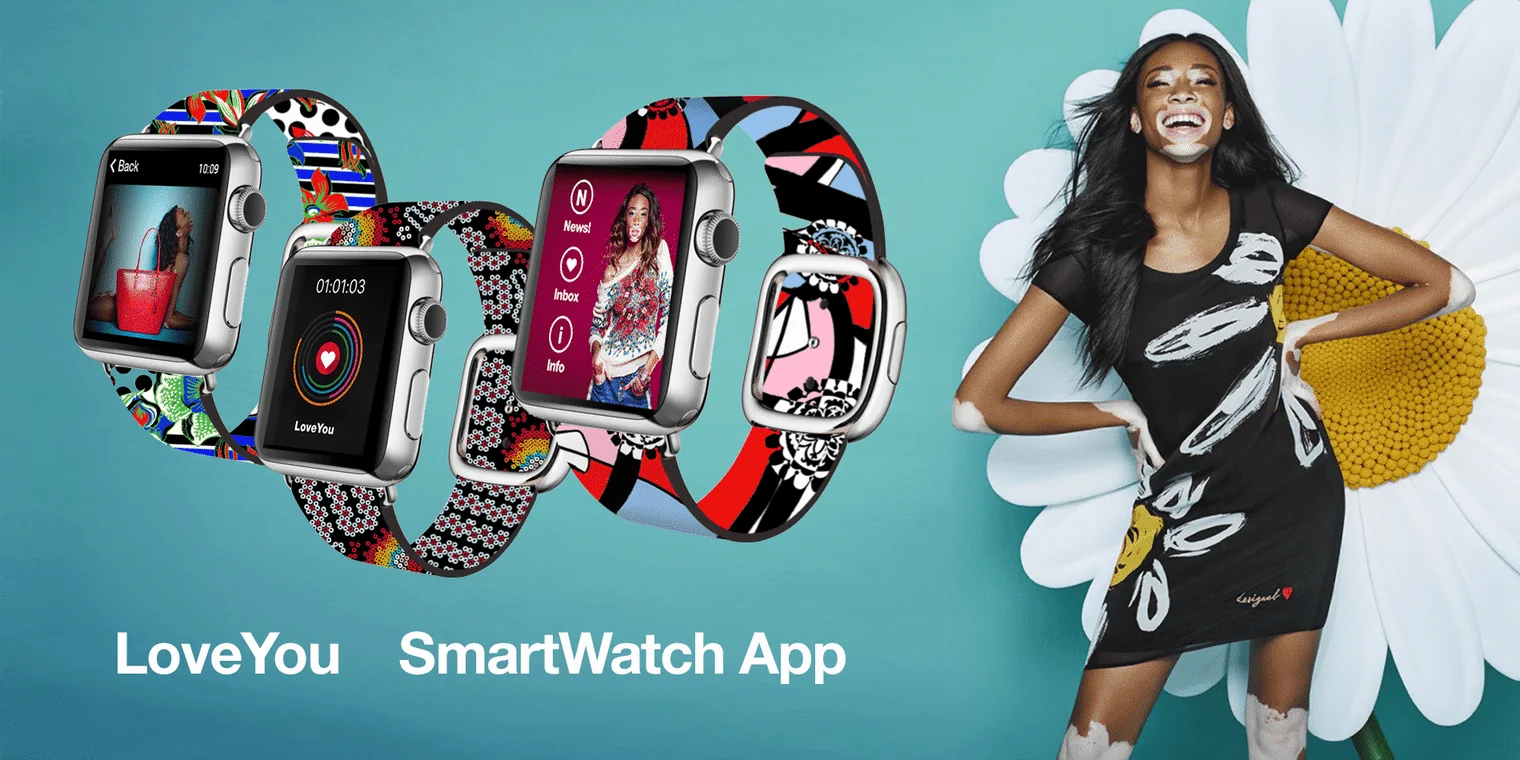
The archive preserves Desigual Mag proposals, LoveYou screens, navigation concepts and content compositions. They include areas such as beauty, fun and personal relationships. The task was to decide what belonged on the wrist and what needed the iPhone’s greater space.
Designing the experience rather than the device
A small screen demands choices. A notification, a short piece of information and a specific action serve different purposes from an editorial page or a sequence of photographs on a phone. UX/UI design had to establish continuity between the two formats without duplicating the same experience.
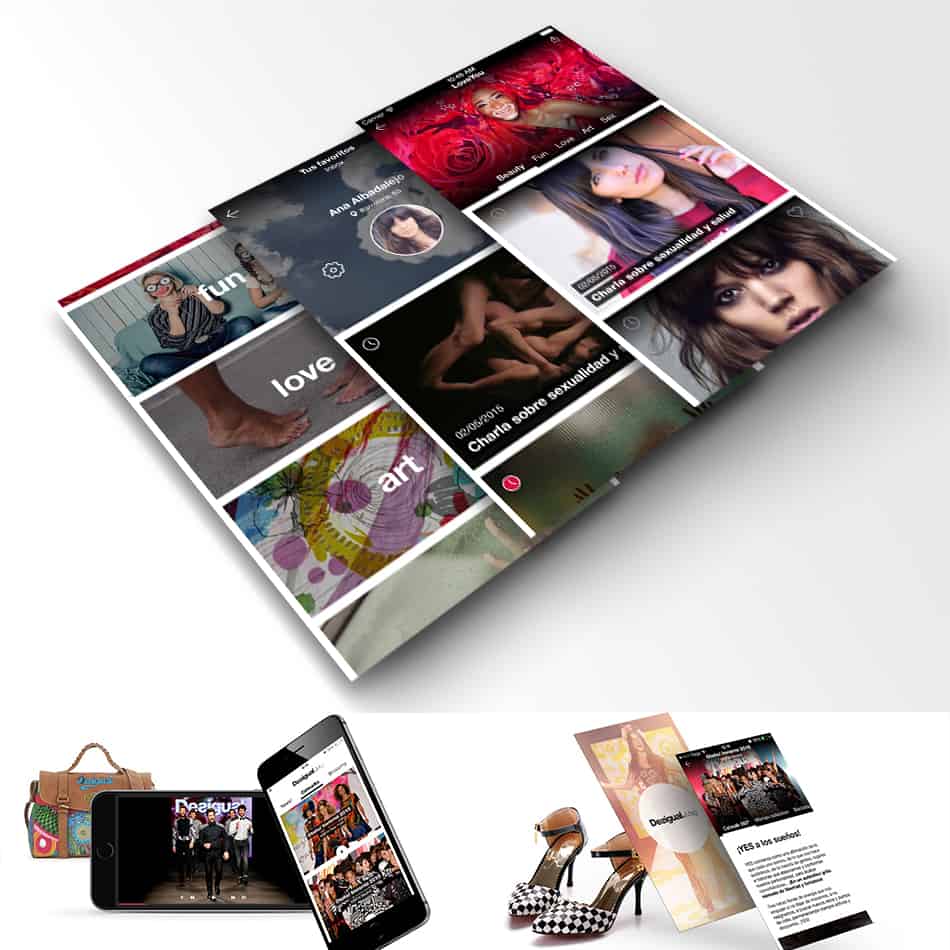
The preserved proposals show that dialogue between content, identity and use. The watch was the medium; the work concerned the application’s concept, its user journeys and the relationship it proposed with the brand. That is the contribution I want to recover from LoveYou.
Fashion, imagery and the brand relationship
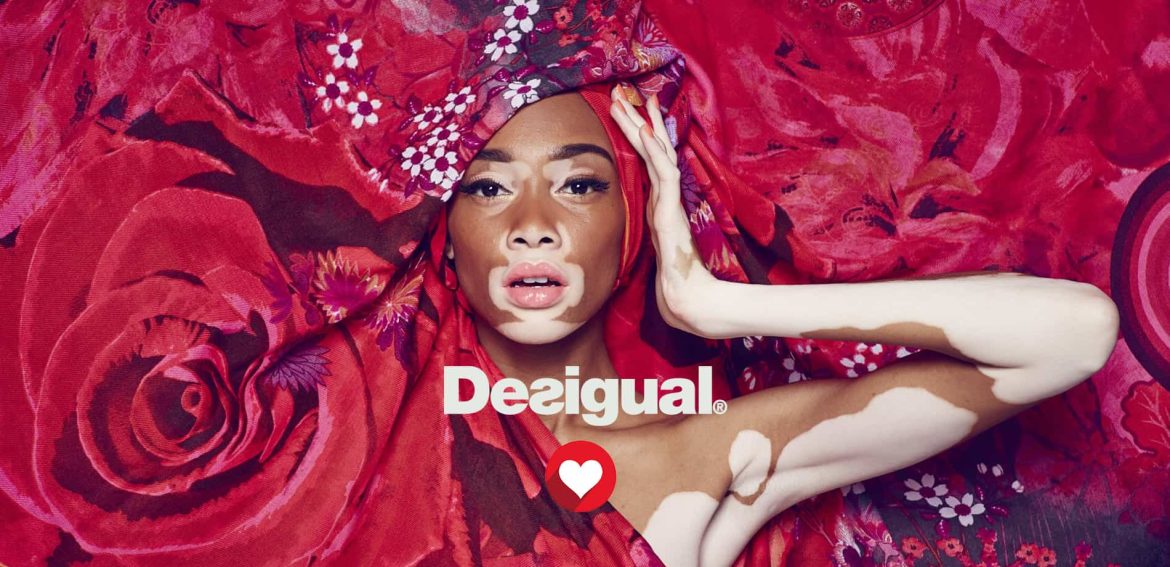
Campaign photographs, models and Desigual references help explain the project’s visual world. They show why the application needed a voice and identity of its own rather than a generic interface.

Looking back at the archive, what interests me is this translation between worlds: from clothing and photography to a digital experience that accompanies a person. Technology makes a medium available; design decides which relationship is worth building through it.
Sources and documents
WECOLAB: Desigual LoveYou, scope, client and partner. Original April 2015 LoveYou concept and UX/UI documents and the October 2014 Barcelona workshop materials preserved in my archive.