
Archive recovered in November 2026. The original publication is documented by month; the 15th shown in the header is assigned to organise this archive.
In December 2009 I published “Sin mapa no hay tesoro” in Yorokobu, written with Sergio García Pino. Page 32 preserves my byline and a question that went beyond finding an address: what happens when people add meaning, memories and recommendations to a map?
The article belongs to my work with branded digital experiences and communities. Recovering it connects the web and mobile applications with a continuing interest in context. The surviving reference identifies the magazine month, without establishing a particular publication day.
The following year the article was chosen for the book Latino Link, by Joe Kutchera, published in the United States in 2010, where it appears in English as “You Can’t Find Treasure Without a Map”.
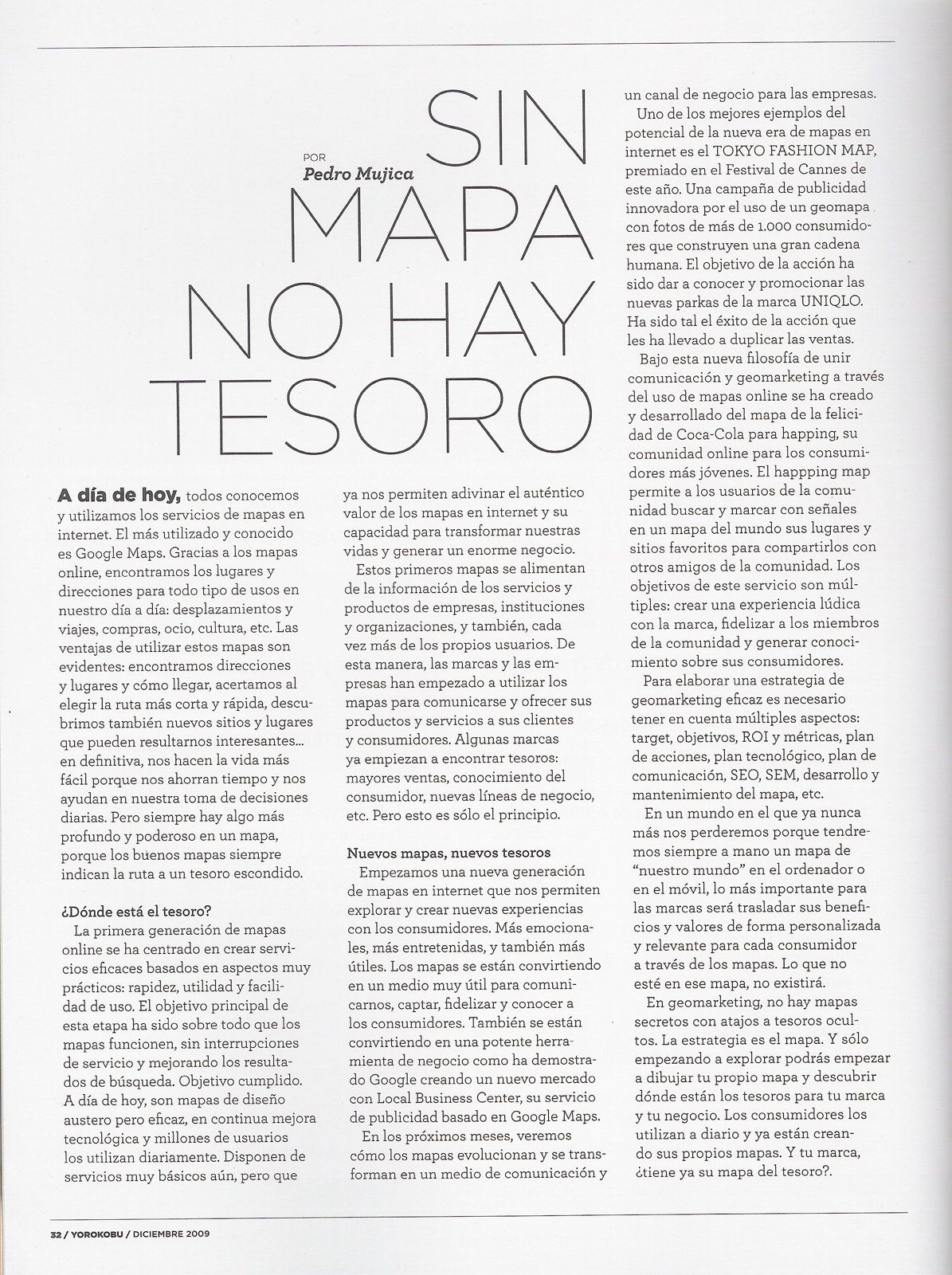
Read “Sin mapa no hay tesoro” as PDF · Download PDF
From finding somewhere to building a relationship
A useful map helped people arrive. The next opportunity was to give them reasons to stay: discover a recommendation, share an experience or recognise other people through the places they marked.
The article distinguished practical location services from the communication possibilities created by user contributions. That distinction still helps me assess a project. An interface can work well without giving anyone a compelling reason to participate.
Coca-Cola Happing Map: places and shared experience
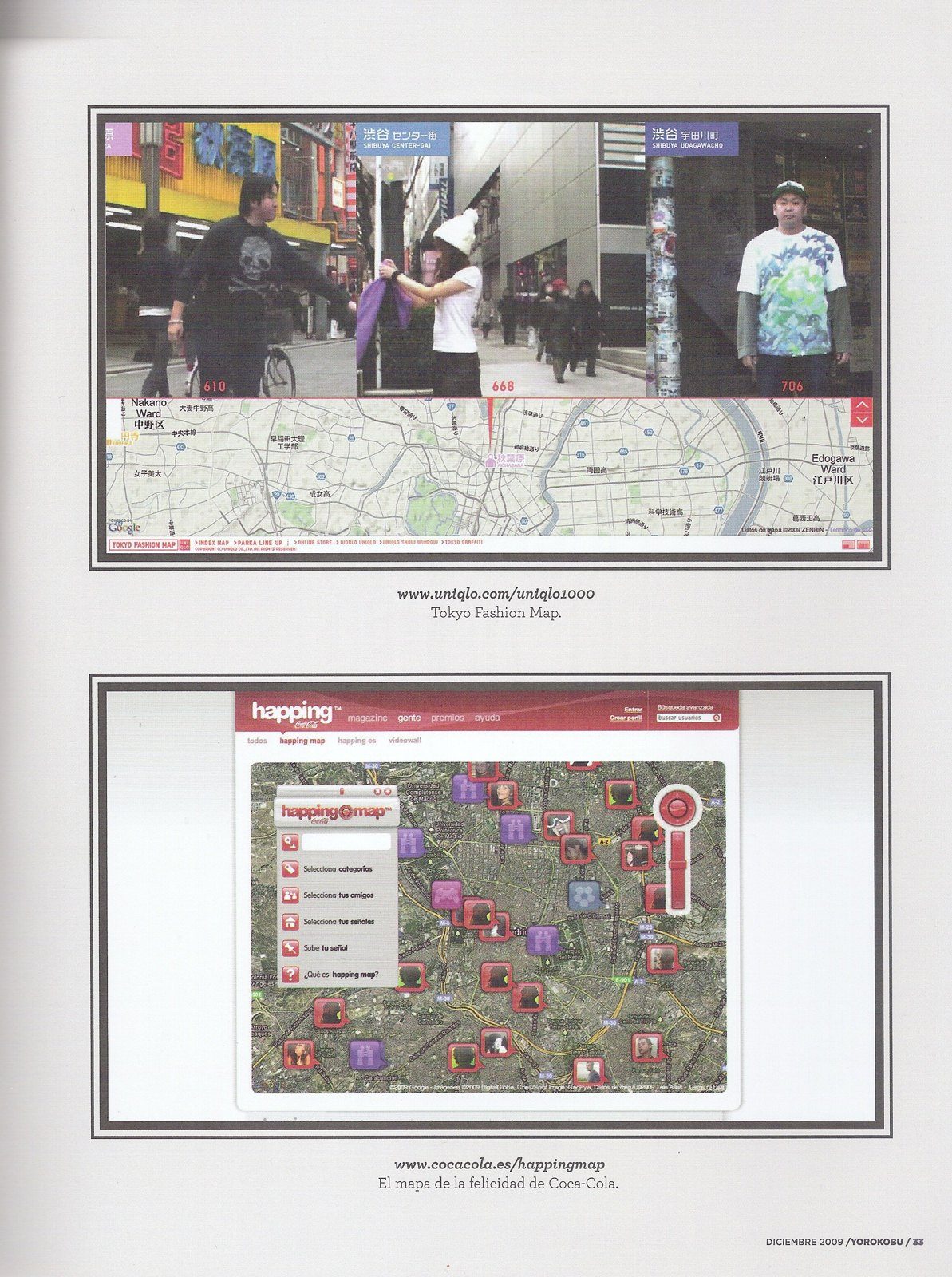
The original pages include Happing Map, the happiness map for Coca-Cola’s Happing community. Participants could mark favourite places and share them. Its interest lay in connecting personal experience with a community, rather than simply placing commercial information on a map.
The pages also feature UNIQLO’s Tokyo Fashion Map as an external reference. I do not claim that project as my own. Keeping both examples shows how the article combined professional experience with observation of other initiatives.
Strategy was the real map
The closing section called for an audience, objectives, metrics, actions, technology, communication and maintenance. Having a map was not the same as having a strategy. Someone still had to consider the service, the contribution process and the reasons a person might return.
Reading it now, I would give particular attention to control over location and meaningful choice. Context can be valuable without becoming an excuse to collect everything. The W3C link provides current technical documentation; the screenshots and figures reproduced in the magazine belong to 2009.
Another appearance from my current archive: Coca-Cola Happing Map at Campus Party Valencia 2008: mapping happiness.