
Archive recovered in November 2026. The header date refers to the historical record; this is a contemporary editorial reconstruction.
In 1999 I gave a talk for Grupo Recoletos during my time as Technical and Interactive Creative Director at DoubleYou. That is the setting for this entry: interactive advertising and web design when the Internet was still defining its own language for brands.
Working for a brand online meant deciding what someone could do after arriving, how the interface would respond and what relationship might develop after a first visit. The creative idea and its technical execution were parts of the same problem.
From brand identity to experience
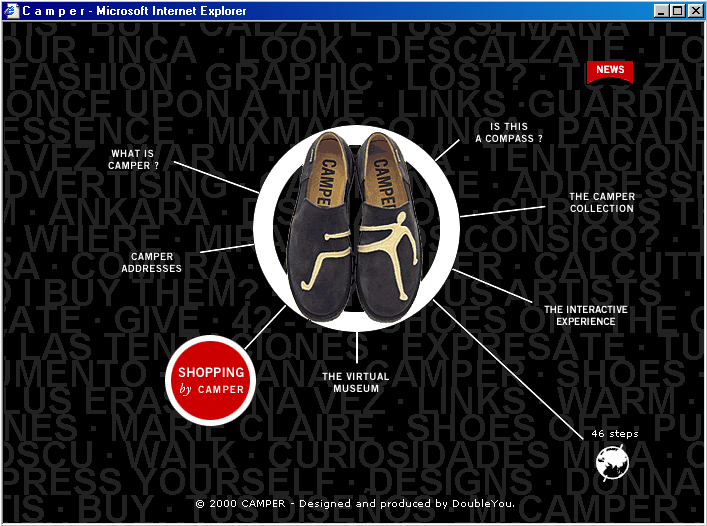
Camper and Philips are among the websites I worked on during that period. The work combined technical direction, creativity and interaction: understanding a brand’s identity and turning it into an experience people could explore and use.
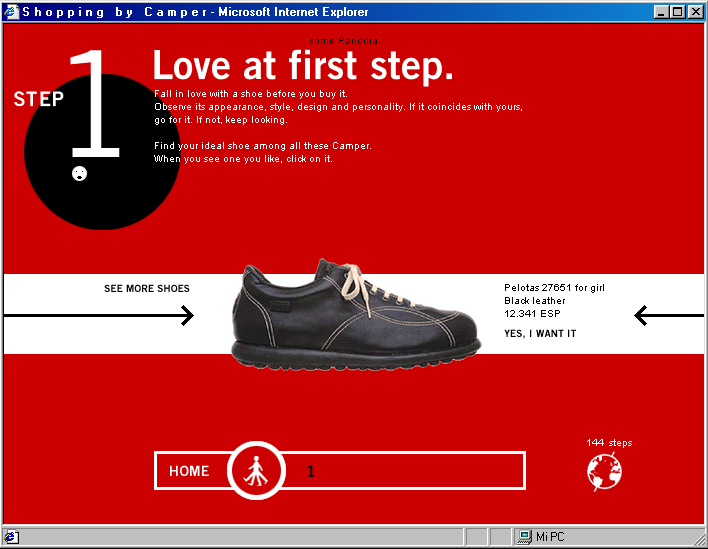
Navigation communicates too. The pace at which content appears, the presentation of a collection and the actions available shape how a brand is understood. Designing that relationship required testing the visual idea alongside its technical behaviour.
CDR Philips: recovering the original interface
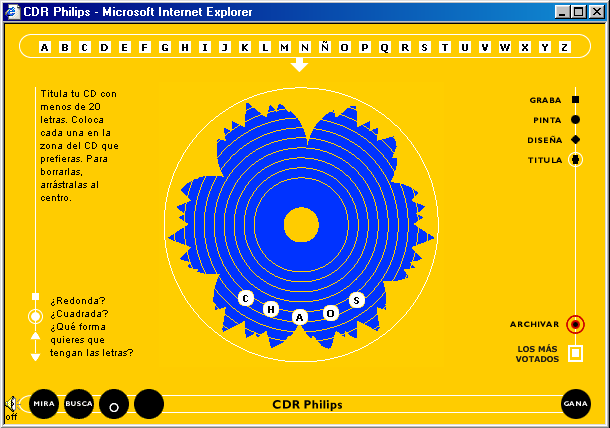
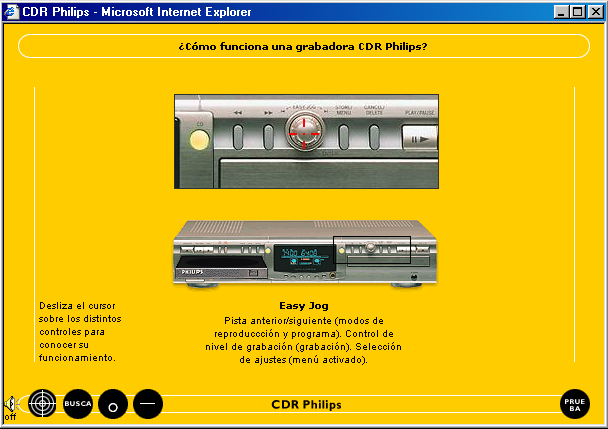
The archive preserves original CDR Philips project screens: a CD cover-design tool and an explanation of the recorder. They illustrate interactive design from that period, alongside the historical Camper screenshots. These screenshots document the website project; they do not establish which slides I showed at the talk.
Before the permanent social-media shop window
The surrounding ecosystem was different. The social networks and applications we now take for granted did not exist. A website concentrated much of a brand’s ability to offer an experience of its own, with a distinctive tone and rules of interaction.
That freedom also involved constraints: loading times, browser compatibility, screen sizes and available resources. Creativity could not be separated from whether a piece actually worked. An ingenious interaction that nobody could load or understand missed its purpose.
A specific stage of my career
The Grupo Recoletos talk and the work at DoubleYou belong to this early stage of my career in digital advertising. Revisiting them reveals a continuing interest in the relationship between people, technology and meaning, even as the devices and tools change.
Sources and references
DoubleYou · Camper: contemporary brand imagery · Pedro Mujica’s career.