
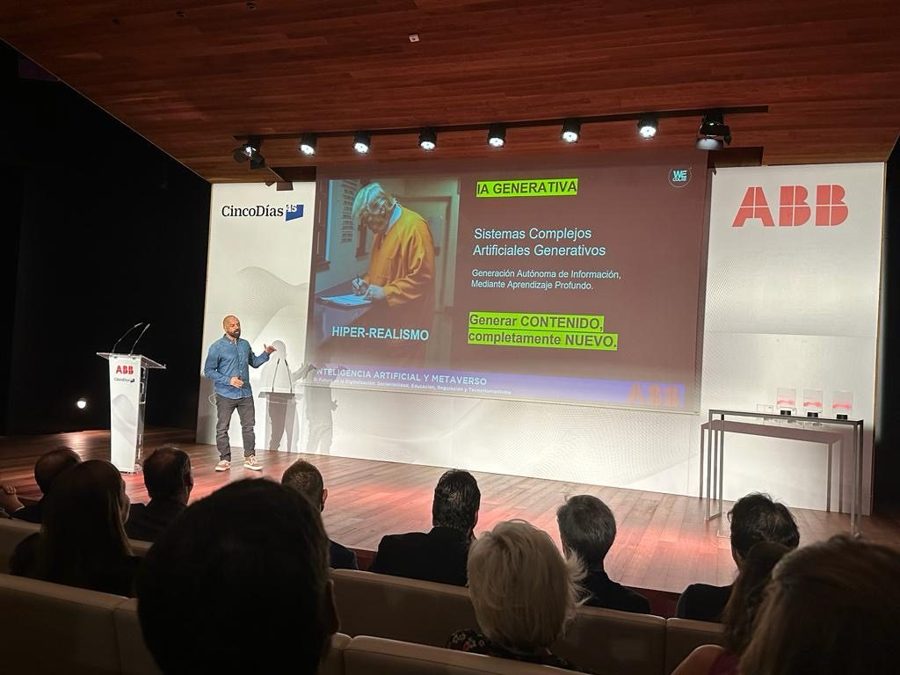
My talk on AI and the metaverse at the ABB Ability Awards shared a setting with energy, food and education projects: a useful place to ask what actually improves.
A technology presentation can be persuasive before it has changed anything. A project working on building ventilation, food waste or education must answer different tests. That distance between a narrative and its application makes my participation in the 2023 ABB Ability Awards worth revisiting.
The Speaking archive dates “The future of digitalisation: AI and the metaverse” to 3 October in Madrid. ABB documented my contribution to the ceremony for the sixth edition of its Digitalisation and Sustainability awards. The event recognised projects from businesses, public administrations and organisations addressing specific problems.
From technical capability to purpose
The winners included Sener’s RESPIRA, an intelligent ventilation control solution; Visionary Hospitality’s Buffet Waste, concerned with food waste; and Vodafone Spain Foundation’s DigiCraft education programme. These are the projects described by ABB. Their outcomes need to be examined in the relevant documentation, rather than treating an award as universal certification of their effects.
That setting places a healthy demand on a conversation about AI and the metaverse. Saying that a tool personalises, predicts or simulates is only the beginning of an explanation. We still need to identify the decision it supports, the information it uses and how we will establish whether the change was useful. A simulation has operational value when its relationship with the world it represents is sufficiently clear.
Sustainability needs a comparison too
Revisiting the talk, I am not adding retrospective savings figures to a conference. I want to preserve a criterion for examining a proposal: compare the situation before and after, explain the resources required and acknowledge costs that may fall outside the headline indicator.
A system may improve one part of a process while complicating another. Evaluation should therefore involve the people maintaining and using it as well as those presenting it. The accuracy of a model and the quality of the organisation adopting it are connected, but distinct.
Beyond the stage
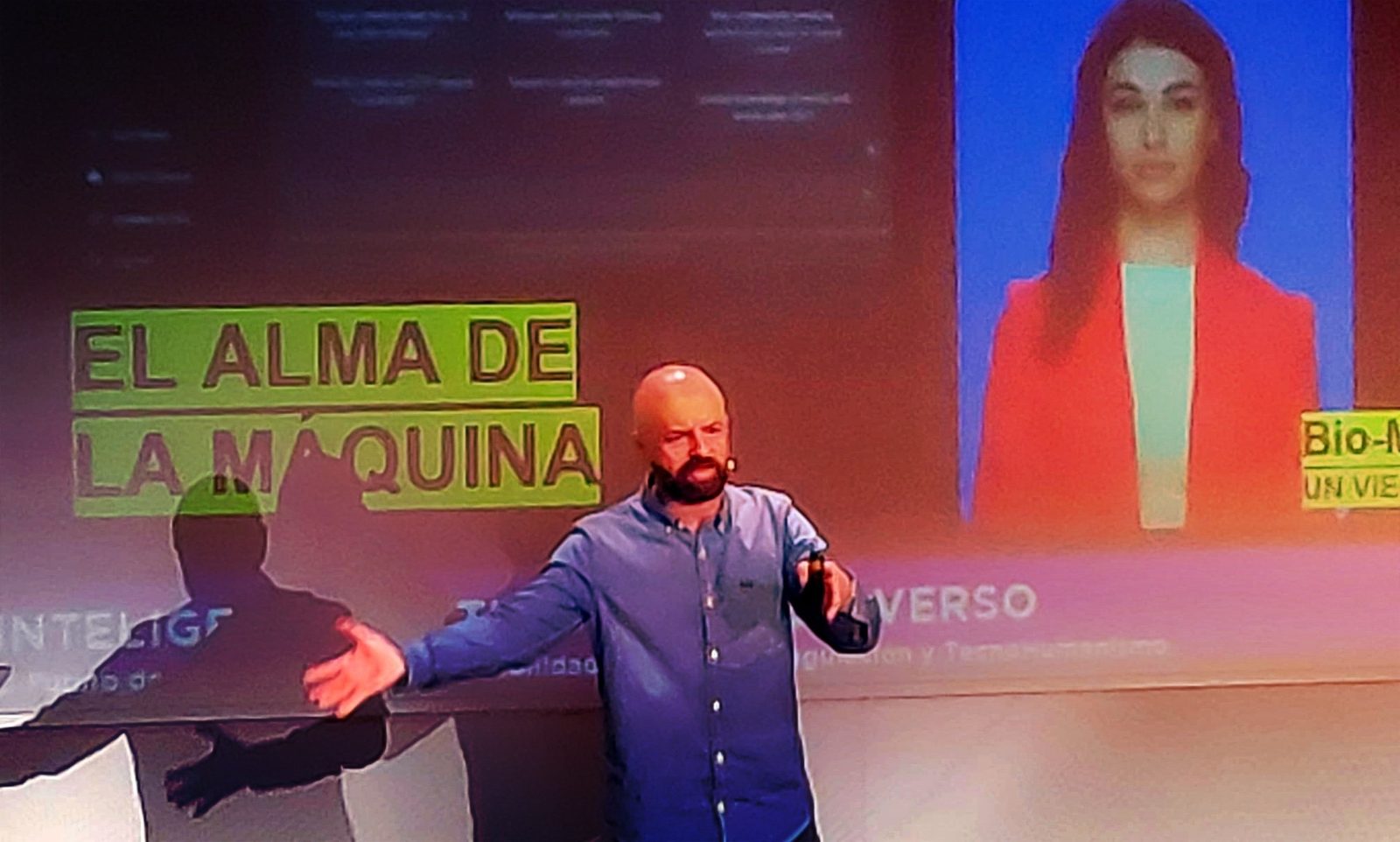
The archive photographs show the intervention and ceremony rather than an imagined reconstruction of a technology event. Keeping them restores a place and date to the analysis, alongside the organiser’s report and press coverage.
An awards ceremony lasts an afternoon. Projects continue afterwards, with exceptions, maintenance and decisions that are difficult to compress into a slide. That is where human-centred digitalisation must demonstrate its value: the promise should remain explainable after the stage has been dismantled.
Sources and archive records
- Pedro Mujica · Archive: speaker, Archive entry.
- ABB, ABB desvela los galardonados de la sexta edición de los premios ABB Ability. Organiser’s report documenting the contribution and winning projects.
Related reading from the present archive: Superhumanos and the technohumanist transition.