

On 26 April 2001 I took part in Baquía in Madrid with a presentation on alternative formats for traditional online advertising. At that time I worked as Interactive Creative Director at WYSIWYG Comunicación Interactiva. That is the stage of my career covered by this article.
The discussion went beyond the space occupied by a banner. The outline covered new access devices, WAP, PDAs, digital television and the differences between communicating through a website and through other media. The question was how to design a relationship with a brand as screens, contexts and opportunities for response changed.
WYSIWYG: interactive creative direction
Ideas and programming needed to work together. As Interactive Creative Director, I was part of that conversation: what someone could do, what response they would receive and what would happen after the first click. Campaign design included functionality, loading times and continuity with other content.
WYSIWYG work: Páginas Amarillas and Caja Madrid
The archive preserves Páginas Amarillas Online and Caja Madrid MultiMarket pieces that help place the agency’s work in context. Advertising, navigation and service shared the same interface: searching for an activity, choosing a location, entering a promotion or accessing an online purchase.
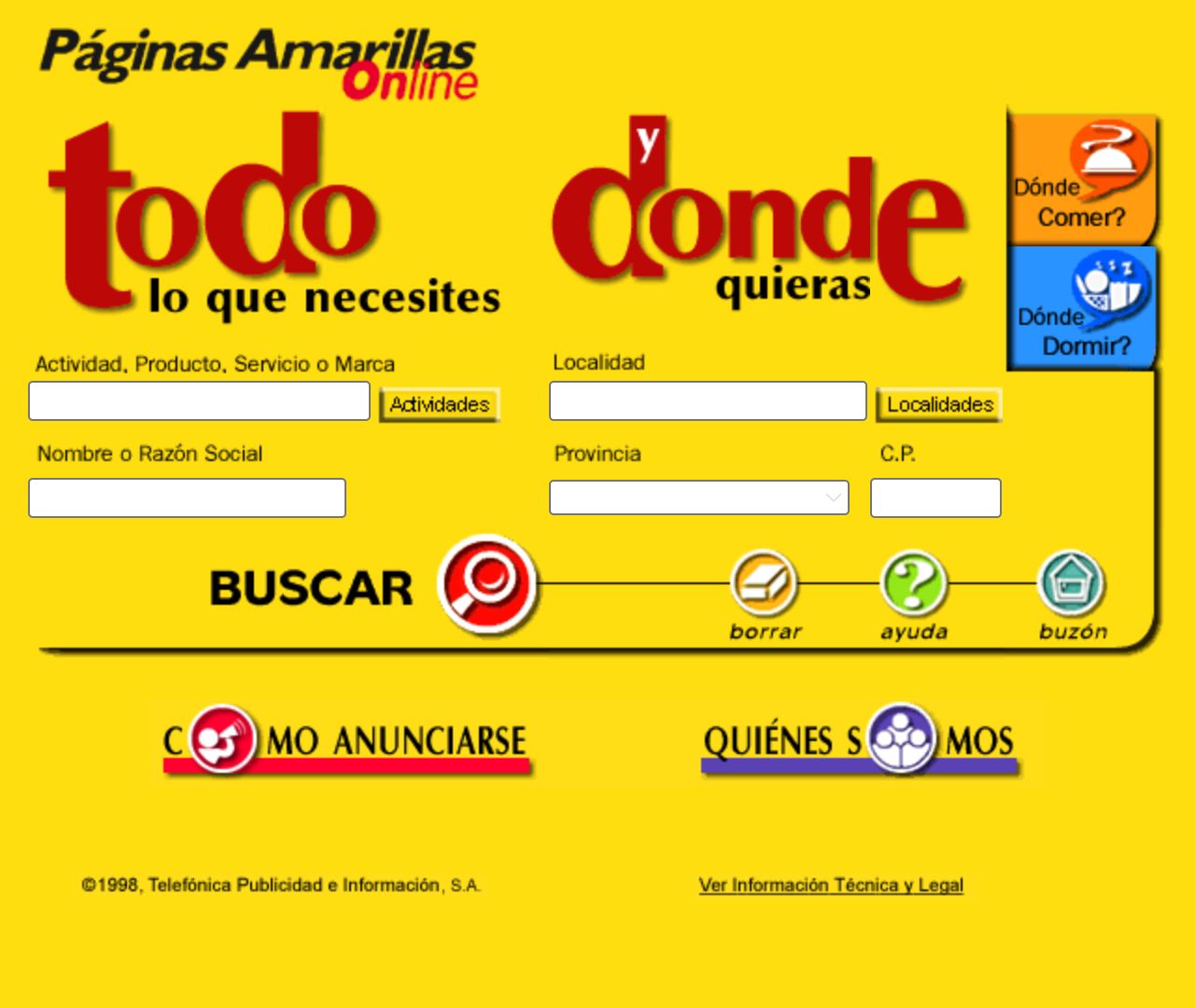
Páginas Amarillas Online organises the user relationship around a practical need: what people are looking for and where they need it. Graphics, form fields and available actions create a brand experience that must remain useful throughout the interaction.
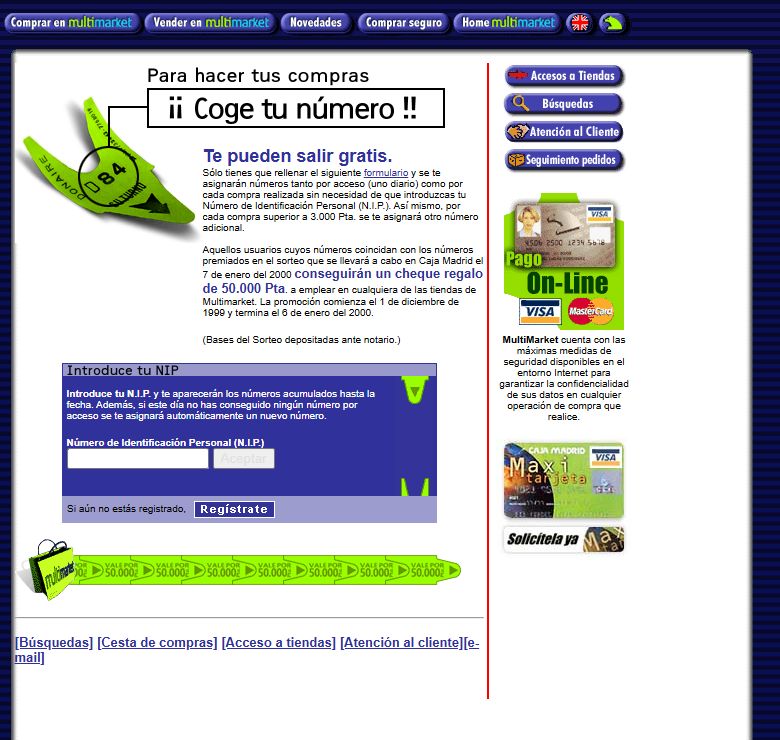
Caja Madrid MultiMarket combines a promotion with access to shops, searches and customer support. It shows how digital work connected a campaign with the processes that followed: registering, finding information and completing an operation. These WYSIWYG archive pieces provide context for this stage; the header date refers to the Baquía presentation.
WAP and interactive television: designing for other media
The original presentation discusses WAP, mobile access to services and interactive television. Its examples include a WAP advertising sequence featuring Audi, connecting sponsored content with subsequent pages. The interesting point is the relationship between the advertisement, the information and the user’s next action.
The outline also asks how to measure effectiveness and manage advertising space in these media. Screen size was one design condition. The setting, navigation method and what someone could understand and decide mattered too.
Continuity in the way of working
Revisiting this material reveals a continuing professional concern: designing communication means considering the other person’s ability to respond. Other devices and languages would follow, while the relationship between creativity, technology and human judgement was already central to the work.
Sources and documents
Original Baquía programme and outline, 26 April 2001; the presentation on alternative formats for traditional online advertising; preserved WYSIWYG websites. Event record · W3C: HTML 4.01 forms, technical context for the web of that period.