
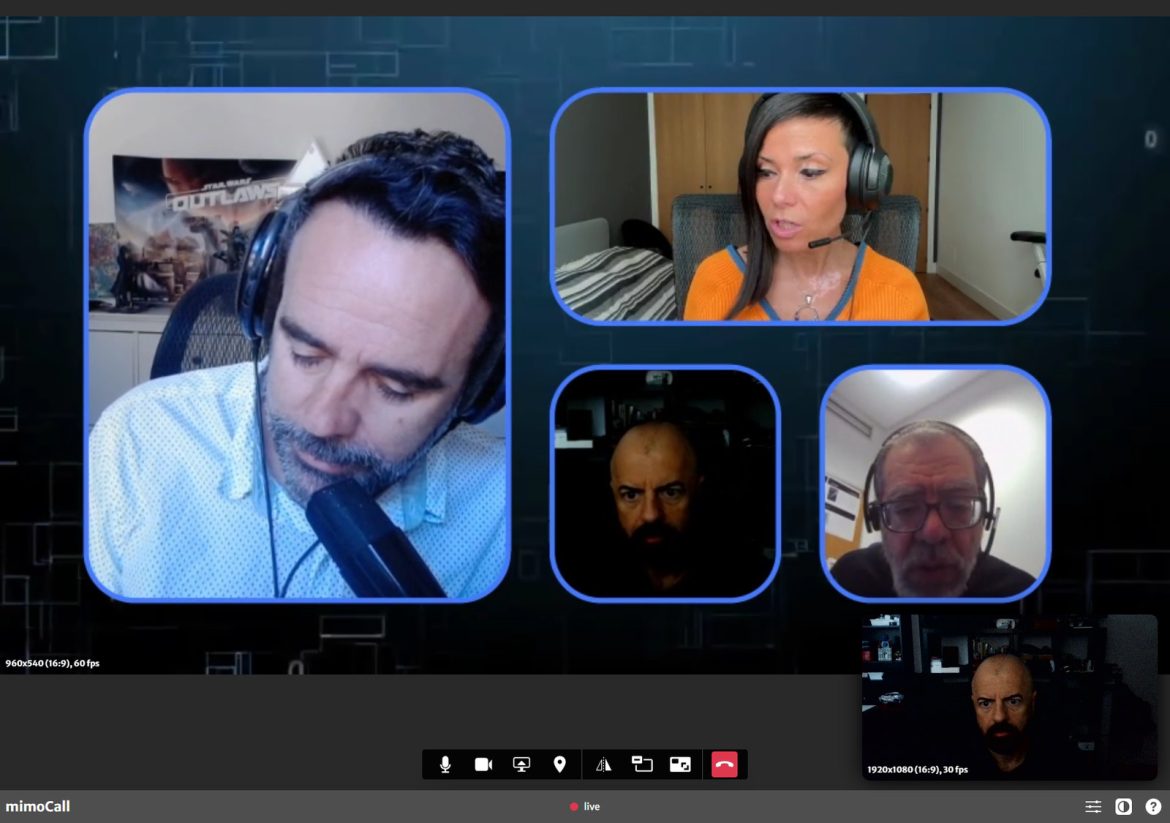
My contribution on RNE, alongside Esther Paniagua and Rafael Caballero, revisits an urgent question: how to sustain trust when a convincing image may be synthetic.
“I saw it with my own eyes” was once a way to end an argument. Today it may start another. A convincing image no longer tells us, on its own, who produced it, where the depicted event took place or whether it happened at all. The ease of manufacturing appearances also changes the work required to understand a news story.
On 21 March 2026, I joined journalist and analyst Esther Paniagua and UCM professor Rafael Caballero for episode 850 of Fallo de sistema on RNE. Titled “The death of reality”, the programme’s official description places the conversation within the crisis of trust associated with generative AI and deepfakes.
An image needs a verifiable history
The title need not mean that a shared reality no longer exists. It identifies a more specific problem: familiar signals for trusting a representation have become insufficient. Looking for unusual fingers, shadows or movement may help in some cases. Treating those clues as a general guarantee would create another form of overconfidence.
RNE · Radio 3 · 21 March 2026 · 59:05 · Original audio in Spanish
Provenance matters. Who published first, what original record exists, whether there are independent sources and what has been cropped are useful questions before sharing. They do not require every citizen to become a forensic laboratory. They require us to recognise when we still lack sufficient grounds for a claim.
Doubt should not mean giving up
There is an effect less visible than the spread of a falsehood: suspicion can become so widespread that genuine evidence stops mattering too. If anything could be fake, people may choose whatever confirms their position. The answer is to make verification more accessible and explain its limits, rather than abandon it.
That is the reflection accompanying this programme record. A detection tool provides a result, not permission to stop thinking. Clear attribution helps place content in context, but does not guarantee that its interpretation is correct.
Listening again, with judgement
RTVE’s page provides the complete episode and identifies its guests. I retain the title and date without attributing specific statements to individual speakers in the absence of a reviewed transcript. The cover uses an original screenshot of the video-call recording, preserved in my archive and dated 18 March 2026.
Trust will not be restored by promising a machine that detects every lie. It is built through traceability, comparison and people willing to correct themselves. In an environment capable of producing increasingly convincing images, knowing how to say “I have not yet been able to verify this” is an essential public skill.
Sources and archive records
- Pedro Mujica · Archive: press, Archive entry.
- RTVE · RNE Audio, Fallo de sistema 850: La muerte de la realidad. Broadcast of 21 March 2026, with the official list of participants.
Related reading from the present archive: HAL 9000 and the self-fulfilling prophecy.